Ad Blocker Detected
Our website is made possible by displaying online advertisements to our visitors. Please consider supporting us by disabling your ad blocker.
Introduction: Why Choose the Frizzlife DI210C Inline Deionization Water Filter System?
Many people are increasingly concerned about the purity of their drinking water and the health of their aquatic or plant life. Standard reverse osmosis (RO) systems are excellent at lowering TDS, but to reach absolute purity—especially for sensitive applications—you often need an extra filtration step. This is where the Frizzlife DI210C Inline Deionization Water Filter System shines. Designed to attach seamlessly to your existing RO setup, it offers the ability to reduce TDS to 0, ensuring water that’s free from minerals, hardness, and contaminants. Whether you’re aiming for pristine drinking water, maintaining a thriving aquarium, or growing hydroponic crops, this system can elevate your water quality in 2026. Its compatibility, ease of installation, and effective resin technology make it an appealing choice for those who require maximum purity without complicated setups.


Unpacking the Key Features of the Frizzlife DI210C Inline Deionization Water Filter System
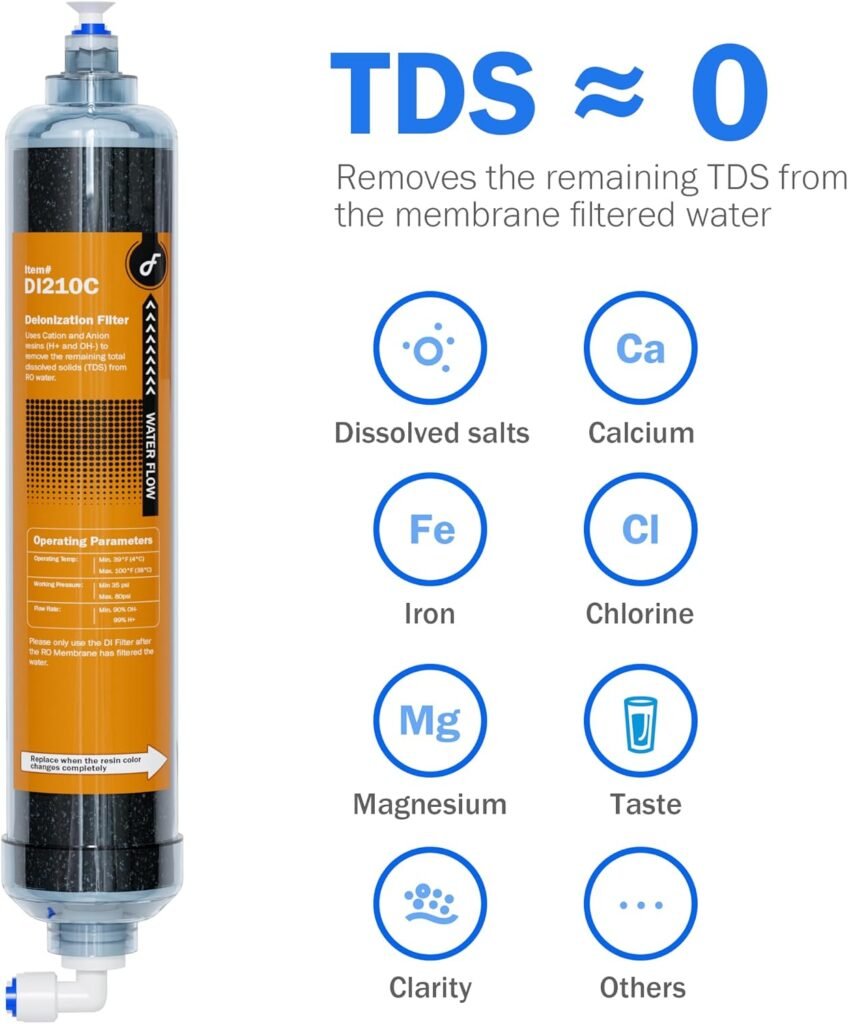
The core function of the Frizzlife DI210C is its ability to remove total dissolved solids (TDS) to zero, a hallmark of pure water. This is especially important for applications like brewing specialty coffee, where mineral levels influence flavor, or in hydroponics, where excess minerals can harm plant roots. The system employs advanced ion-exchange resins that swap mineral ions like calcium, magnesium, and others with hydrogen and hydroxide ions, leaving behind water that’s virtually free of impurities. The significance of this process lies in its ability to prevent scale buildup, extend the lifespan of your other filters, and produce water that mimics natural pure sources.
In terms of fitment, this inline deionization system is versatile. It connects effortlessly with most/4
How the DI210C Builds on Reverse Osmosis: An Extra Layer of Purification
The DI210C acts as a complementary device to most RO systems, providing that crucial finishing touch. While RO membranes are highly effective at removing many impurities, they typically leave residual mineral content that can cause scale or affect water taste. The deionization process, driven by ion-exchange resins, specifically targets these residual mineral ions, ensuring that water reaches an exact TDS of zero. Practical installation is streamlined with the included clamps, allowing you to attach the system inline directly to your existing RO setup.
For best results, regularly monitor the resin color change from blue to tan—it indicates when the resin is exhausted and needs replacement. This helps maintain consistent water purity and prevents performance drops over time.
Customer Feedback & Real-World Performance Analysis
Among verified buyers, customer reviews highlight that the Frizzlife DI210C provides a noticeable reduction in TDS, often bringing levels below ppm, which is ideal for sensitive applications. Many praise its straightforward installation process, with some saying they managed it within minutes. Users also report that water clarity improves significantly after setup, and the resin indicator helps them avoid unexpected performance drops.
However, some reviews mention resin exhaustion within 6-12 months, particularly in hard water areas, leading to the need for resin replacement. A few buyers experienced initial installation difficulties due to incompatible fittings or low water pressure, but these issues are generally minor and solvable. Overall, the majority agree that the system enhances water quality for aquariums and hydroponic gardens substantially.
Who’s It For? Ideal Use Cases and Target Users
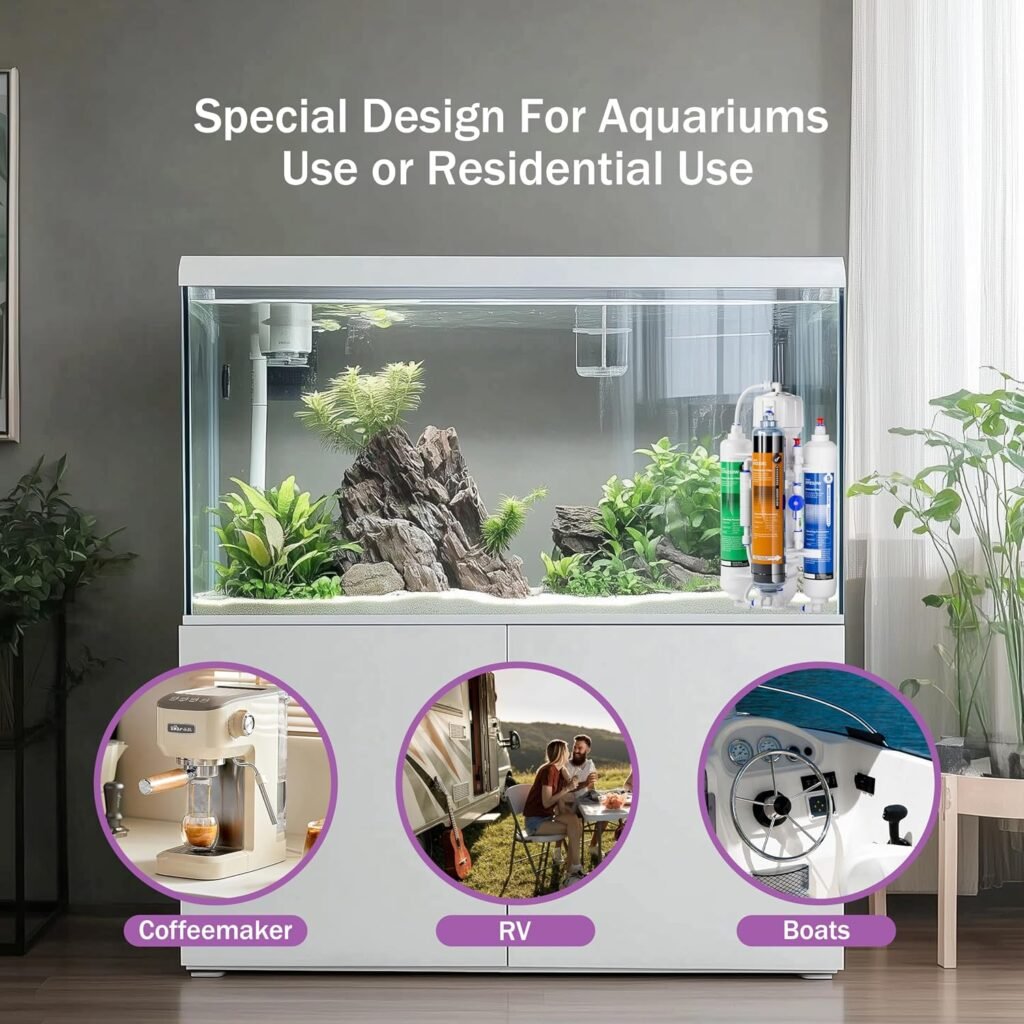
The Frizzlife DI210C is particularly suited for aquarium hobbyists who want pristine water without trace minerals that might harm sensitive fish or corals. Hydroponic gardeners also benefit from mineral-free water, which prevents scale and allows nutrients to be absorbed more effectively. Additionally, anyone who relies on high-quality drinking water — whether for coffee brewing, cooking, or daily consumption — will find this system adds value.
Its easy integration makes it appealing for DIY enthusiasts as well. If you already have a compact RO system or are planning to upgrade, the DI210C is a convenient, effective tool to enhance purity. It also works well in situations where absolute water purity is required, such as laboratory or medical settings, provided the flow rate is sufficient.
Assessing the Value: Is the Frizzlife DI210C Worth Its Price?
While the current price of the Frizzlife DI210C is not specified here, similar inline deionization systems typically retail in the range of £100-£150, depending on features and seller. When comparing with alternative products like the Frizzlife MD40 Electric Water Filter Pitcher or other resin-based inline deionizers, the DI210C offers the advantage of direct inline connection, eliminating the need for bulky pitchers or complex systems.
In terms of cost-effectiveness, buying the DI210C pays off over time by reducing the need for bottled water or expensive lab-grade filtration. Its ability to produce pure water consistently can prevent the scale and mineral buildup that damage appliances, saving money on repairs and maintenance. For dedicated hobbyists or health-conscious households, the high purity level justifies the investment.
Compatibility & Installation Tips for Best Results
To install the Frizzlife DI210C, ensure your existing RO system has/4″ tubing compatible fittings. Shut off your water supply, cut into the tube, and attach the system using the included clamps. Make sure to double-check the direction of flow indicated on the unit. Once installed, turn the water back on and observe for leaks, adjusting clamps as necessary.
Monitoring the resin color change is crucial—replace the resin when it turns tan to maintain water purity. Follow the manufacturer’s replacement instructions carefully, and consider pre-flushing the new resin to remove any loose particles. Regularly inspect for leaks and clean the fittings to prevent contamination or blockages. Proper maintenance ensures consistent flow rates and TDS reduction, extending the lifespan of your system.
Understanding the Technical Specs and What They Mean for You
The key technical specification of the DI210C is its ability to reduce TDS to 0. This benchmark indicates the removal of virtually all soluble minerals and salts, resulting in ultra-pure water suitable for sensitive applications. The ion-exchange resins used are mixed bed, capable of removing both cations and anions effectively.
Flow rates of inline deionization filters generally vary; verify your system’s flow capacity to ensure it meets your needs. Typical lifespan for the resin is about 6-12 months under normal use, with the resin turning from blue to tan when exhausted. The inline design offers a hassle-free, space-saving solution, and the durable construction ensures long-lasting performance in various environments.
Comparison with Other Water Purification Options
Compared to traditional RO units without DI stages, the Frizzlife DI210C provides an extra layer of purification, achieving complete mineral removal. While standard RO systems do a great job at reducing TDS, adding an inline DI filter guarantees TDS, ideal for highly sensitive uses. Alternatives like the Inline DI Resin Cartridges or other resin-based purifiers offer similar benefits but may vary in installation ease, lifespan, and price.
Choosing between these options depends on your specific needs—if you need the highest purity possible, a dedicated inline DI filter like the DI210C is a smart upgrade.
What Customers Are Saying About the Frizzlife DI210C — Real Insights
Customer reviews consistently mention how effective the DI210C is at lowering TDS levels, bringing water purity to a level that’s highly appreciated for aquariums and hydroponic systems. Many buyers note that water clarity and quality noticeably improve after installing it, and the color-changing resin indicator helps simplify maintenance.
Some recurring criticisms include resin exhaustion within a year, especially in areas with hard water, requiring replacement. A few users have faced minor installation challenges, mainly due to incompatible fittings or low water pressure, but these issues are generally manageable. Overall, the consensus is positive, with users valuing the extra layer of purification it provides.
Final Thoughts: Is the Frizzlife DI210C Inline Deionization Water Filter System a Smart Investment?
In summary, the Frizzlife DI210C Inline Deionization Water Filter System offers a practical and effective way to boost water purity, especially when used with standard RO setups. Its ability to reduce TDS to zero makes it especially appealing for aquarium keepers, hydroponic growers, and anyone prioritizing healthful drinking water. While resin replacement and slightly slower flow rates may be minor inconveniences, the system’s performance and ease of installation make it a worthwhile upgrade.
If your water quality matters—whether for hobby, health, or home use—the DI210C is a value-driven choice that can meet your needs in 2026.
Pros and Cons
Pros
- Effectively reduces TDS to 0, ensuring high-purity water for sensitive use cases.
- Easy to install with most/4″ RO systems, suitable for DIY setups.
- Color-changing resin indicator helps monitor when the resin media needs replacement, preventing performance drops.
Cons
- Resin life can vary depending on water quality; many users report needing resin replacement after approximately 6-12 months.
- Some buyers mention that installation can be tricky if your existing fittings are not compatible or if the system is not properly secured.
- The flow rate might be slower compared to larger filtration units, especially if water pressure is low or the resin is nearing exhaustion.
Final Verdict
Key Takeaways
- The Frizzlife DI210C Inline Deionization Water Filter System effectively reduces TDS to zero, ensuring pure water for drinking, aquariums, and hydroponics.
- Easy to install with most/4″ RO systems, making it suitable for DIY setups and home use.
- The color-changing resin indicator simplifies maintenance by alerting when resin needs replacing.
- Incorporating this system can extend the lifespan of your main RO unit and improve overall water quality.
- Resin lifespan typically ranges from 6-12 months, depending on water hardness and usage, so regular monitoring is essential.
Frequently Asked Questions
What is the primary use of the Frizzlife DI210C Inline Deionization Water Filter System?
The Frizzlife DI210C Inline Deionization Water Filter System is designed to attach directly to your existing reverse osmosis (RO) setup, providing an extra layer of purification by reducing TDS (total dissolved solids) to zero. Many users install it to achieve cleaner drinking water, improve hydroponic systems, or maintain pristine aquariums. Its ability to further purify membrane-filtered water makes it a popular choice among hobbyists and professionals alike.
How does the Frizzlife DI210C achieve filtration?
The DI210C uses ion-exchange resins that swap mineral ions like calcium and magnesium with hydrogen and hydroxide ions to produce pure water. It offers compatibility with most/4-inch RO systems, thanks to its universal fitting capability. The inline design ensures ease of installation, simply attaching it with provided clamps to your existing water filtration setup.
What do customers say about the performance of the Frizzlife DI210C?
Customer reviews indicate that the DI210C is effective in reducing TDS levels to zero, which is ideal for applications requiring ultra-pure water like aquariums, hydroponics, and high-quality drinking water. Many users praise its straightforward installation, with some noting a significant improvement in water clarity and taste after installation. However, a few mention that the resin needs replacement after some months to maintain optimal performance.