Ad Blocker Detected
Our website is made possible by displaying online advertisements to our visitors. Please consider supporting us by disabling your ad blocker.
Installing a water ionizer filter requires careful preparation, precise removal of existing components, and secure reconnection to guarantee ideal performance. We recognize the importance of safety and proper technique, which is why following detailed steps is essential. Proper installation not only guarantees effective filtration but also extends the lifespan of your system. The process involves critical checks and adjustments that, if overlooked, can compromise water quality. Let’s explore the key procedures to ensure a reliable, leak-free setup.
Key Takeaways
- Turn off the main water supply and release residual pressure before removing or installing filters.
- Carefully disconnect existing filter components, inspecting for damage or debris during removal.
- Use Teflon tape on threaded fittings to ensure a secure, leak-free connection during installation.
- Reconnect the new filter, ensuring proper sealing and tightening to prevent leaks.
- Turn on the water supply, check for leaks, and flush the system to ensure proper operation.
How to Prepare Your Water and Tools for Installation
Before beginning the installation process, make sure to properly prepare both your water supply and the necessary tools to guarantee a smooth setup. First, assess your water source, ensuring it meets the water quality standards recommended for ideal ionizer performance. Implement eco-friendly practices by minimizing water waste during pre-flush procedures, supporting water conservation efforts. Gather essential tools such as adjustable wrenches, screwdrivers, and Teflon tape, verifying their functionality before starting. Shut off the main water supply and relieve system pressure to prevent leaks. Use a clean bucket or container to collect residual water, reducing waste. Precise preparation of both water and tools not only streamlines installation but also aligns with sustainable practices, ensuring efficient operation and environmental responsibility.
Understanding Your Water Ionizer Filter and Its Components
Understanding the material composition and core components of your water ionizer filter is essential for proper maintenance and peak performance. We focus on the filter media, such as activated charcoal or mineral blends, and the key structural parts like housings and seals. Clarifying these elements helps guarantee correct installation and effective filtration.
Filter Material Composition
The effectiveness of a water ionizer filter largely depends on its material composition, which determines its ability to remove impurities and facilitate ionization. Understanding your filter material through a detailed composition analysis is vital for peak performance and longevity. The filter material typically includes activated carbon, mineral stones, and specialized resins, each contributing specific purification properties. Composition analysis helps identify the purity, pore structure, and chemical stability of these components, ensuring they meet safety standards. Properly selected materials enable efficient removal of contaminants like chlorine, heavy metals, and sediments. Additionally, the right composition enhances ion exchange capacity, boosting alkaline water production. Regularly examining the filter material composition ensures consistent quality and effective filtration over time.
- Pore size and surface area
- Chemical stability and porosity
- Purity and certification standards
Key Filter Components
A thorough knowledge of the key components within your water ionizer filter is fundamental to optimizing its performance and maintenance. The core components include the filter media, housing, and seals, each critical for guaranteeing proper filtration and chemical compatibility. Proper selection influences filter lifespan and efficiency, preventing degradation over time. The filter media, often activated carbon or mineral stones, must be compatible with your water chemistry to avoid corrosion or clogging. The housing provides structural integrity, while seals prevent leaks.
| Component | Function |
|---|---|
| Filter Media | Removes impurities, influences lifespan |
| Housing & Seals | Contain media, assure chemical compatibility |
| Maintenance | Regular replacement extends lifespan |
Step-by-Step Guide to Turn Off Your Water Supply Safely
To guarantee safety during filter installation, we first locate the main water valve and verify that the water supply is fully shut off. Next, we release any residual pressure in the pipes to prevent leaks or injury. Following these steps guarantees a controlled and safe environment for the subsequent work.
Locate Main Water Valve
Before beginning the installation process, we must locate the main water valve to shut off the water supply safely. Identifying this valve is vital for maintaining water quality and guaranteeing the filter lifespan isn’t compromised during installation. Typically, the main valve is found near the perimeter of the property, such as in basements, utility rooms, or outside near the foundation. It’s essential to understand the type of valve—ball or gate—for quick operation.
- Check for a large circular handle or lever indicating the main shutoff
- Confirm the valve’s connection to the primary water line
- Guarantee accessibility for future maintenance or emergency shutoffs
Accurate location prevents water leaks, preserves water quality, and guarantees a smooth, efficient filter installation.
Confirm Water Is Off
Once we’ve identified the main water valve, the next step is to verify that the water supply is fully shut off. Confirming this is essential to prevent water flow during filter replacement, guaranteeing water quality remains uncompromised. Turn the valve handle clockwise until it stops; this halts all water ingress to the system. Check downstream fixtures or the water ionizer to ensure no flow is present. If water continues to flow, recheck the valve position or consider shutting off secondary shut-off valves. Properly confirming the shutoff prevents leaks and contamination, which could impact water quality and hinder effective filter replacement. This step guarantees a safe, dry environment for proceeding with the installation, minimizing risk and ensuring peak performance of your water ionizer system.
Release Residual Pressure
Have you considered the residual pressure that remains in your water lines even after shutting off the main valve? This pressure can pose safety risks during maintenance, affecting hydraulic safety and potentially damaging components. Before proceeding, use pressure gauges to verify pressure levels, making certain they’re released safely. To release residual pressure effectively:
- Open a nearby faucet to vent remaining water and pressure
- Gradually loosen fittings to prevent sudden pressure release
- Monitor pressure gauges continuously until readings stabilize at zero
This process minimizes the risk of sudden bursts, protects hydraulic safety, and ensures a safe working environment. Properly releasing residual pressure is critical to avoid water damage and ensure safe installation or maintenance of your water ionizer filter.
How to Remove the Existing Filter or Connectors?
How do we effectively remove the existing filter or connectors without damaging the system? For ideal filter replacement, start by turning off the water supply and releasing residual pressure. To remove the filter, carefully disconnect it using a filter wrench if necessary, ensuring not to apply excessive force that could damage the housing. For connector removal, gently loosen fittings with a wrench or pliers, taking care to avoid cracking or stripping threads. Inspect the connectors and filter housing for debris or corrosion, cleaning as needed before installing the new components. Proper technique in connector removal ensures a secure fit and prevents leaks. Precision during this step maintains system integrity and prepares it for seamless installation of the new water ionizer filter.
Installing the Water Ionizer Filter: A Detailed Walkthrough
To guarantee a proper installation of the water ionizer filter, we start by preparing the system and verifying compatibility. Ensuring the best water quality requires selecting the correct filter type and confirming fit within the existing setup. Proper installation directly influences the filter’s lifespan, preventing premature replacement and maintaining consistent water ionization performance.
Key steps include:
- Confirming filter specifications match the manufacturer’s recommendations.
- Ensuring the water flow direction aligns with system design.
- Checking that all fittings and connectors are secure to avoid leaks.
Attention to these details guarantees the filter operates efficiently, preserves water quality, and maximizes lifespan, ultimately supporting the ionizer’s peak functionality.
Checking for Leaks and Ensuring a Proper Seal
We begin by carefully inspecting all connection points for signs of leaks or loose fittings. Properly applying Teflon tape guarantees a secure, watertight seal, especially at threaded joints. After assembly, we test the system thoroughly to detect any hidden leaks before finalizing the installation.
Inspect Connection Points Carefully
Careful inspection of connection points is essential to prevent leaks and guarantee the system functions correctly. During connection inspection, we focus on verifying tight fittings and proper alignment to assure a secure seal. This step is critical for leak prevention, as even minor gaps can lead to water damage or system failure. It’s important to check all joints and adapters for signs of looseness or misalignment. Additionally, inspecting the integrity of the connections ensures that no cross-threading or damage exists, which could compromise the seal.
- Confirm all fittings are hand-tightened before final tightening
- Look for cracks or deformities in plastic or metal components
- Ensure no debris or obstructions are present at connection points
Use Teflon Tape Properly
Applying Teflon tape correctly to threaded connections guarantees a reliable seal and prevents leaks in the water ionizer system. When working with pipe fittings, it’s vital to wrap the Teflon tape clockwise around the male threads, ensuring even coverage without overlapping excessively. Proper application reduces the risk of gaps or loose fittings that could cause leaks. Use enough tape to fill the threads but avoid over-application, which can obstruct the connection. Firmly tighten the fittings after wrapping, maintaining a secure, watertight seal. Accurate use of Teflon tape enhances the integrity of the connection, minimizes the chance of leakage, and guarantees the longevity of the system. Precision in this step is essential for maximum performance and maintenance of the water ionizer system.
Test for Hidden Leaks
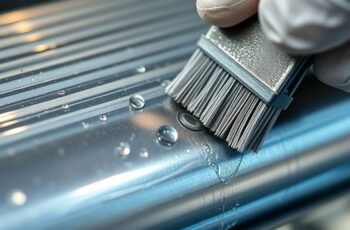
To guarantee the integrity of the water ionizer system, it’s essential to thoroughly test for hidden leaks after installation. Detecting leaks early prevents water damage, preserves system efficiency, and supports environmentally responsible practices. We recommend pressurizing the system with water and observing for drips or drops that indicate leaks. Additionally, inspecting connection points with a leak detection solution enhances accuracy. Proper sealing minimizes water wastage, aligning with sustainable goals and reducing environmental impact.
- Check all fittings and joints for moisture or drips during and after pressurization
- Use a leak detection solution around seals and connections for visible bubbles
- Confirm system pressure stability over time to catch slow leaks
This process exemplifies how creative marketing can highlight eco-friendly features, emphasizing reliability and sustainability in water filtration systems.
How to Reconnect Your Water Supply and Test the System?
After securing the water supply connections, we proceed to test the system to guarantee proper operation and leak-free performance. First, we turn on the water supply and observe all connection points for leaks. We verify the water flow is steady and free of drips, indicating secure fittings. Next, we verify the water quality at the outlet, checking for clarity and proper mineral balance. This step confirms the filter is functioning correctly and not impeding flow or water purity. We also monitor the system’s pressure to detect any restrictions that could reduce filter lifespan. Running water through the system briefly helps flush out residual debris. Regular testing guarantees the best water quality and maximizes filter lifespan, ensuring consistent performance and safe drinking water.
Troubleshooting Common Installation Issues
Even with careful installation and thorough testing, issues can still arise that disrupt the system’s performance. Common problems often relate to water quality and filter lifespan, which directly impact ionizer efficiency. For example, mineral deposits from poor water quality can clog filters prematurely, reducing effectiveness. Incorrect tubing connections or inadequate sealing may cause leaks or inconsistent flow. Additionally, electrical connections might be loose or improperly grounded, affecting system operation.
- Verify water source quality and adjust pre-filtration if necessary
- Check all tubing and fittings for secure, leak-free connections
- Ensure electrical wiring is properly connected and insulated
Addressing these issues helps maintain ideal water quality and extends filter lifespan, ensuring consistent ionization performance.
Maintaining Your Water Ionizer Filter for Longevity and Performance
Regular maintenance of your water ionizer filter is crucial to guarantee peak performance and extend its lifespan. To achieve this, monitor the filter’s lifespan regularly, typically every 6 to 12 months, depending on water quality and usage. Preventing mineral buildup is essential, as accumulated minerals can clog the filter media, reducing filtration efficiency and compromising water quality. Conduct routine inspections for signs of mineral deposits, such as decreased flow rate or cloudy water. Implementing a thorough cleaning protocol, using appropriate descaling agents, helps mitigate mineral buildup and maintains ideal filter function. Proper maintenance ensures consistent water ionization performance, prolongs filter service life, and preserves the overall integrity of your system. Adhering to these practices maximizes both longevity and filtration effectiveness.
Tips for Safe and Effective Water Ionizer Filter Installation
To guarantee a safe and effective water ionizer filter installation, it is essential to carefully follow the manufacturer’s instructions and verify the compatibility of replacement filters with your specific model. Proper installation directly impacts water quality and filter lifespan, assuring optimal performance. Before beginning, isolate the water supply and depressurize the system to prevent leaks. Use appropriate tools and confirm all connections are secure to avoid contamination. Pay close attention to filtration specifications and ensure the filter matches your water quality needs. Additionally, monitor system pressure and flow rates during installation to maintain efficiency.
- Confirm filter compatibility with your water quality parameters
- Regularly inspect for leaks or misalignments
- Record installation date to track filter lifespan
Frequently Asked Questions
What Are the Signs of a Failing Water Ionizer Filter?
We notice declining water quality indicators, such as taste or clarity, and reduced filter lifespan, which signal a failing water ionizer filter. Regularly monitoring these signs helps maintain the best filtration and prevents system damage.
Can I Install the Filter Myself Without Professional Help?
Yes, you can tackle DIY installation, but it requires precise tool requirements and technical knowledge. Think of it as assembling a complex puzzle—careful handling and understanding of the system guarantee proper filter replacement and peak performance.
How Often Should I Replace My Water Ionizer Filter?
We recommend adhering to the filter maintenance and replacement schedule specified by your water ionizer manufacturer, typically every 6 to 12 months, to guarantee peak performance and water quality, and to prevent buildup and system inefficiencies.
Are There Specific Tools Recommended for Installation?
For installation, we recommend using basic tools like adjustable wrenches, Phillips and flat-head screwdrivers, and pliers, following DIY guidelines precisely to guarantee secure connections and ideal filter performance, minimizing leaks and ensuring proper system operation.
What Safety Precautions Should I Follow During Installation?
We investigate the importance of installation safety, emphasizing that controlling water pressure and wearing protective gear minimizes risks. Making sure proper connections are established and adhering to manufacturer instructions are essential steps to prevent accidents and guarantee a secure, effective setup.
Conclusion
Proper installation and maintenance of your water ionizer filter guarantee peak performance and safety. Regular inspections can extend the filter’s lifespan by up to 50%, maintaining water quality and preventing leaks. By following our detailed steps and troubleshooting tips, you can confidently achieve a leak-free setup that provides clean, ionized water daily. Consistent care not only safeguards your system but also guarantees your investment delivers reliable, high-quality hydration every time.