Ad Blocker Detected
Our website is made possible by displaying online advertisements to our visitors. Please consider supporting us by disabling your ad blocker.
Just as a surgeon meticulously cleans surgical tools to guarantee precision, maintaining water ionizer electrodes requires careful, methodical attention to detail. Proper cleaning not only preserves electrode performance but also extends the device’s lifespan, which is why understanding best practices is essential. We’ll explore the critical steps for safe, effective cleaning and how to prevent issues before they arise—an approach that can safeguard your water quality and equipment reliability.
Key Takeaways
- Power off and disconnect the unit before cleaning to ensure safety and prevent electrical hazards.
- Use non-abrasive tools and appropriate cleaning solutions like diluted vinegar or citric acid based on electrode material.
- Rinse electrodes thoroughly with distilled water after cleaning to remove residual deposits and cleaning agents.
- Regularly inspect electrodes for signs of corrosion or mineral buildup and clean proactively.
- Follow manufacturer guidelines for cleaning agents and procedures to prevent damage and maintain optimal performance.
How to Identify When Your Electrodes Need Cleaning
Electrodes in water ionizers require regular inspection to determine when cleaning is necessary. Electrode corrosion often signals the onset of efficiency decline, making it a key indicator for maintenance. Visible signs include rough or pitted surfaces, which can compromise electrochemical reactions. Scaling prevention becomes critical if mineral deposits accumulate, as scaling impairs conductivity and reduces ionization performance. Elevated voltage readings, inconsistent pH levels, or decreased hydrogen output are also signs that electrodes are compromised. Monitoring these parameters helps identify the need for cleaning before corrosion worsens or scale buildup causes further damage. Regular inspection ensures electrodes maintain maximum performance, preventing long-term deterioration and ensuring the ionizer functions efficiently. Regular assessment of electrode condition is essential for effective scaling prevention and system longevity.
Step-by-Step Guide to Safely Cleaning Water Ionizer Electrodes
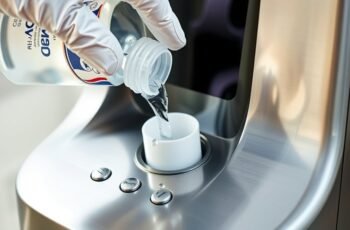
To guarantee safe and effective cleaning of water ionizer electrodes, it is essential to follow a structured step-by-step process that minimizes risk to the device and operator. Begin by disconnecting the power supply and noting electrode materials to select appropriate cleaning methods. Regular cleaning frequency, based on usage, prevents mineral buildup. Use non-abrasive tools to gently remove deposits, avoiding damage. Prepare cleaning solutions suitable for electrode materials, ensuring compatibility. Carefully rinse electrodes with distilled water to eliminate residual contaminants. Reassemble the unit, verify connections, and test functionality before resuming use.
| Step | Action | Notes |
|---|---|---|
| 1 | Power off and disconnect | Prevent electrical hazards |
| 2 | Inspect electrode materials | Determine suitable cleaning method |
| 3 | Clean with appropriate tools | Avoid scratching or damaging surfaces |
| 4 | Rinse thoroughly | Use distilled water to prevent mineral deposits |
| 5 | Reassemble and test | Confirm proper operation and safety |
Common Cleaning Solutions and When to Use Them
Selecting the appropriate cleaning solutions depends on the electrode material and the type of mineral buildup. For titanium electrodes with scale deposits, a diluted vinegar or citric acid solution effectively dissolves mineral buildup without damaging the material, recommended for routine cleaning. Ceramic electrodes may require specialized descaling agents formulated for their composition, used less frequently to prevent deterioration. The cleaning frequency should be based on mineral content in your water and usage patterns; high mineral levels demand more regular cleaning with appropriate solutions. Acidic solutions should be used cautiously, ensuring compatibility with electrode material to prevent corrosion. Always follow manufacturer guidelines for each cleaning agent to maintain electrode integrity and optimize performance over time.
Tips to Prevent Mineral Buildup and Maintain Electrode Performance
Regular maintenance practices can considerably reduce mineral buildup on water ionizer electrodes, prolonging their lifespan and guaranteeing ideal performance. To achieve this, understanding the electrode material is essential, as different materials respond uniquely to mineral deposits. Maintaining perfect water pH levels is critical; highly alkaline or acidic water accelerates mineral accumulation. Monitoring and adjusting water pH prevents excessive mineral precipitation on the electrodes. Installing pre-filters can also minimize mineral content entering the system. Regularly flushing the electrodes with appropriate cleaning solutions reduces mineral adherence and preserves conductivity. Consistent maintenance aligned with the electrode material’s specifications and water pH parameters ensures efficient ionization, minimizes mineral buildup, and sustains electrode performance over time.
Troubleshooting Electrode Issues After Cleaning
After cleaning water ionizer electrodes, we often encounter issues such as decreased conductivity, irregular pH levels, or diminished ionization efficiency. These problems can stem from electrode corrosion, which compromises surface integrity and disrupts electrical conductivity. When corrosion occurs, the electrode’s ability to facilitate ion exchange diminishes, leading to inconsistent water alkalinity or acidity. To troubleshoot, we check for visible signs of corrosion and verify electrical conductivity with a multimeter; a drop indicates compromised electrodes. If corrosion is severe, reconditioning or replacing electrodes becomes necessary. Ensuring proper cleaning techniques and avoiding abrasive materials during maintenance can prevent future issues. Addressing these electrode problems promptly maintains ideal ionization performance and prolongs electrode lifespan.
Frequently Asked Questions
How Often Should I Schedule Professional Maintenance for My Water Ionizer?
We recommend scheduling professional maintenance every 6 to 12 months to guarantee electrode durability and ensure proper functioning. Consistent maintenance scheduling prevents buildup, extends lifespan, and maintains ideal ionizer performance, aligning with technical care standards.
Are There Specific Cleaning Methods for Different Types of Water Sources?
We adapt water source-specific cleaning methods by analyzing mineral content, using descaling solutions for hard water, and applying gentle brushes or chemical cleaners for soft water, ensuring electrode maintenance aligns with each water source’s unique mineral and impurity profile.
Can Cleaning Solutions Damage My Water Ionizer’s Electrodes if Used Improperly?
Cleaning solutions can damage electrodes if misused, causing electrode corrosion or leaving cleaning residue, which impairs function. We always recommend following manufacturer instructions meticulously to prevent such issues and guarantee ideal electrode longevity and performance.
What Are the Environmental Impacts of Various Electrode Cleaning Chemicals?
Sure, our cleaning chemicals might seem harmless, but their chemical safety and environmental impact reveal hidden risks—pollution, toxicity, and ecological harm. We must choose environmentally friendly solutions to protect both our health and the planet.
How Do I Dispose of Used Cleaning Solutions Safely and Responsibly?
We carefully follow chemical disposal regulations, neutralize used cleaning solutions, and utilize recycling methods when possible, ensuring safe, environmentally responsible disposal. Proper handling minimizes ecological impact, aligns with regulations, and promotes sustainable practices in chemical management.
Conclusion
Regular cleaning of our water ionizer electrodes is vital for peak performance. Studies show mineral buildup can reduce efficiency by up to 30%, emphasizing the importance of routine maintenance. By inspecting, cleaning with appropriate solutions, and implementing preventative measures, we can extend electrode lifespan and maintain water quality. Staying proactive not only guarantees consistent ionization but also minimizes costly repairs, ultimately safeguarding the investment and health benefits our water ionizer provides.