Ad Blocker Detected
Our website is made possible by displaying online advertisements to our visitors. Please consider supporting us by disabling your ad blocker.
Like a surgeon preparing for a precise operation, we recognize the importance of meticulous care when it comes to maintaining a water ionizer. Proper sanitization is essential for ensuring the device’s safety, efficiency, and longevity, yet many overlook the critical steps involved. To achieve the best results, we must follow specific procedures that eliminate mineral buildup and prevent bacterial growth. Discovering the exact methods helps us preserve water quality and extend our equipment’s lifespan—so let’s explore how to do it correctly.
Key Takeaways
- Turn off and unplug the water ionizer before starting sanitation procedures.
- Remove and rinse detachable parts with warm water to eliminate loose debris.
- Prepare a sanitizing solution, such as manufacturer-recommended cleaner or diluted vinegar.
- Conduct an internal flush with the sanitizing solution to remove mineral buildup and biofilms.
- Rinse all components thoroughly to ensure no chemical residues remain before reassembling.
How Does Sanitization Keep Your Water Ionizer Safe and Efficient
Since mineral buildup and bacterial contamination can compromise the performance of a water ionizer, regular sanitization is vital for maintaining its safety and efficiency. Proper sanitization directly enhances water quality by removing residual minerals and biofilms that may harbor bacteria. This process prevents bacterial contamination, which can cause health issues and foul odors. By eliminating bacteria and mineral deposits, sanitization guarantees the ionizer functions at peak levels, providing consistent alkaline and acidic water outputs. Maintaining a sterile internal environment minimizes the risk of biofilm formation, which can impair electrode performance and reduce ionization efficiency. Ultimately, regular sanitization sustains the longevity of the device, ensures water safety, and preserves its ability to produce high-quality water with minimal bacterial presence.
What Supplies and Tools Are Needed for Effective Cleaning
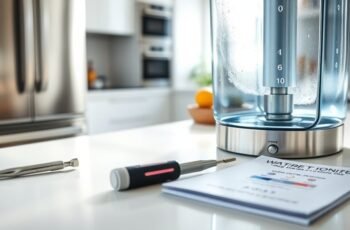
To effectively sanitize a water ionizer, we need to gather specific supplies and tools designed for thorough cleaning without damaging the device. Essential items include cleaning brushes for internal components, a filter replacement kit to guarantee optimal performance, and cleaning solutions compatible with the machine’s materials. Additionally, we require a soft cloth, distilled water, and safety gloves to prevent contamination and protect sensitive parts. Proper tools enable precise cleaning, especially in hard-to-reach areas. The table below summarizes key supplies:
| Supplies | Purpose |
|---|---|
| Cleaning brushes | Remove mineral buildup and debris |
| Filter replacement | Maintain water quality and efficiency |
| Cleaning solutions | Disinfect and remove deposits |
| Safety gloves | Protect hands during cleaning |
Step-by-Step Guide to Sanitizing Your Water Ionizer
Begin by turning off the water ionizer and unplugging it from the power source to guarantee safety during the cleaning process. Next, remove and rinse all detachable components, such as filters and flow chambers, with warm water to maintain ideal water quality. Prepare a sanitizing solution using a manufacturer-recommended cleaner or a diluted vinegar solution, ensuring it reaches all internal surfaces. Follow your device’s maintenance schedule, typically involving a thorough internal flush with the sanitizing agent, to eliminate mineral buildup and microbial residues. Use a soft brush or cloth to clean inaccessible areas carefully. Rinse all components thoroughly to prevent chemical residues that could affect water quality. Proper adherence to these steps ensures the machine remains hygienic and functions efficiently.
Common Mistakes to Avoid During the Sanitization Process
While following proper sanitization steps is essential, we must also be mindful of common mistakes that can compromise the process. One critical error is neglecting thorough rinsing, which can leave chemical residues that affect water quality and safety. Additionally, improper handling of cleaning agents may pose electrical safety risks, especially if residues contact electrical components. Using incompatible cleaning solutions can damage the ionizer’s internal parts, leading to malfunctions.
| Mistake | Consequence |
|---|---|
| Inadequate rinsing | Residual chemicals, compromised water quality |
| Ignoring electrical safety | Risk of electrical shock or damage to the device |
| Using inappropriate cleaners | Damage to internal components |
| Rushing the process | Incomplete sanitization, chemical residue buildup |
How Often Should You Sanitize Your Water Ionizer for Optimal Performance
Regularly sanitizing your water ionizer is essential for maintaining ideal performance and guaranteeing water quality. The recommended maintenance schedule varies depending on usage and water source, but a general guideline is to sanitize every 1-3 months. Frequent use or high mineral content in your water can accelerate biofilm and mineral buildup, necessitating more frequent cleaning. Consistent sanitization prevents microbial growth and preserves optimal ionization efficiency. Monitoring your water quality through taste or testing can help determine if additional cleaning is needed outside the routine schedule. Implementing a precise maintenance plan tailored to your specific water source ensures your ionizer functions correctly and delivers pure, healthy water. Adhering to this schedule supports both appliance longevity and water safety.
Frequently Asked Questions
Can I Use Household Bleach to Sanitize My Water Ionizer?
We advise against using household bleach for sanitization safety, as it can damage the water ionizer and leave harmful residues. Instead, follow manufacturer-approved cleaning solutions to guarantee thorough, safe sanitization without risking equipment integrity.
Are There Specific Brands of Sanitizers Recommended for Water Ionizers?
We recommend specific sanitizers like ClearWater or AquaPure for ideal sanitizer effectiveness, ensuring brand compatibility and thorough cleaning. These scientifically formulated options protect your water ionizer, avoiding damage from generic products and guaranteeing safe, pure drinking water.
What Are Signs That My Water Ionizer Needs Immediate Sanitization?
We notice signs like persistent machine odor, cloudy water, or reduced filtration efficiency, indicating water filter maintenance is overdue and immediate sanitization is needed to eliminate odors and guarantee peak performance of your water ionizer.
Is It Safe to Use Vinegar for Sanitizing My Water Ionizer?
Research shows vinegar effectively kills bacteria and is safe for cleaning. We recommend it for maintenance routines, but guarantee proper dilution and avoid prolonged contact to prevent damage, making it a viable cleaning agent for sanitizing your water ionizer.
How Long Should the Sanitization Process Take for Thorough Cleaning?
We recommend a thorough sanitization process lasting approximately 20-30 minutes, incorporating proper sanitization techniques, to guarantee effective cleaning. Regular cleaning frequency depends on usage but should be performed at least monthly for ideal hygiene.
Conclusion
In summary, sanitizing your water ionizer isn’t just a tedious chore—it’s the secret to pristine, bacteria-free water that keeps you healthy and your device running smoothly. Ignore this step at your peril; otherwise, you risk mineral buildup turning your machine into a biohazard. So, embrace the process with precision and vigilance, because nothing says “I care about my health” like a meticulously sanitized water ionizer—after all, who needs bacteria when you can have pure, sparkling water?