Ad Blocker Detected
Our website is made possible by displaying online advertisements to our visitors. Please consider supporting us by disabling your ad blocker.
We’re exploring five top water ionizers that fit into small kitchens, delivering compact power and quick hydrogen-rich water. From rechargeable bottles to SPE/PEM tech-backed generators, these picks aim for one-button simplicity, easy cleaning, and steady 1200–2000 ppb output. They’re built for portability, USB charging, and 230–300 ml servings that suit busy days. Durability, upright storage, and battery life matter too. Curious about which model best fits your space and routine? Let’s start narrowing possibilities.
Key Takeaways
- Compact hydrogen water bottles using SPE/PEM technology deliver ~3-minute electrolysis with ~1200–2000 ppb in small, portable glass designs ideal for limited counter space.
- Battery-powered, USB-rechargeable models provide multiple cycles per charge, reducing clutter and allowing easy, on-the-go use in small kitchens.
- Most designs require mineral or alkaline water for optimal hydrogen content, with purified water often needing modification or avoiding use.
- Simple one-button interfaces and detachable cups promote quick, hassle-free operation suitable for fast-paced kitchens.
- Durable, BPA-free or glass bottles with stable bases minimize tipping risks and fit neatly under cabinets while maintaining portability.
Hydrogen Water Bottle with Ionizer (Rechargeable)
The Hydrogen Water Bottle with Ionizer (Rechargeable) is our top pick for busy individuals who want on-the-go hydrogen-rich water without sacrificing flavor or convenience. We rely on SPE and PEM tech to rapidly electrolyze ordinary water, turning it into hydrogen ion-rich alkaline water in about 3 minutes. We suggest using electrolyte water for stronger hydrogen content, and note that electrolyte-free water won’t electroize. The glass, portable design is durable and rechargeable, ideal for office, travel, or workouts. Hydrogen acts as an antioxidant, reducing oxidative stress and supporting energy, sleep, memory, and recovery, with long-term gains in fatigue and muscle soreness.
Best For: Busy individuals seeking on-the-go hydrogen-rich water with a convenient, rechargeable glass bottle solution for office, travel, or workouts.
Pros:
- Rapid electrolyzation (about 3 minutes) using SPE and PEM technology.
- Portable, durable glass bottle with rechargeable battery for everyday use.
- Health benefits narrative: antioxidant hydrogen helps reduce oxidative stress and may aid energy, sleep, recovery, and muscle soreness.
Cons:
- Requires electrolyte-containing water; electrolyte-free water won’t electroize.
- Glass bottle may be less impact-resistant than plastic options.
- Long-term health claims are general benefits of molecular hydrogen and may vary by individual.
Hydrogen Water Generator Bottle with SPE/PEM Technology
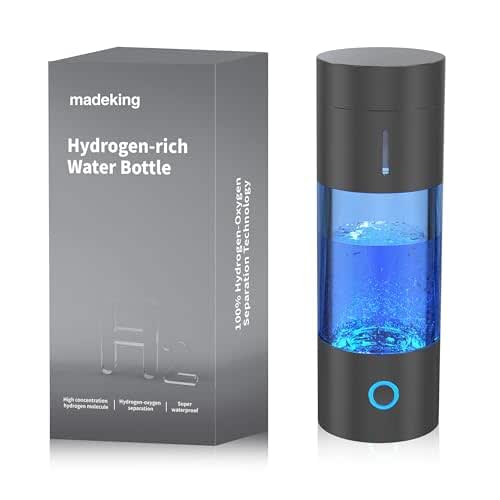

We designed this Hydrogen Water Generator Bottle with SPE/PEM Technology for anyone who wants portable, hydrogen-rich water on the go. Our bottle uses SPE plus PEM to electrolyze water, separating H2 and O2, delivering hydrogen-rich water in ~3 minutes. It holds about 230 ml and reaches pH 7.5–9.0; after 4–6 minutes, H+ tops ~2000 ppb. To maximize results, use mineral, spring, or alkaline water, not purified or distilled. It’s rechargeable (1800 mAh) for ~15 uses, with heat up to 60°C or cooling options. Simple one-button operation, LED progress, black design, packaged for gifting and on‑the‑go fitness.
Best For: Fitness enthusiasts and on-the-go users seeking portable hydrogen-rich water for quick hydration and mild antioxidative support.
Pros:
- Portable 230 ml bottle with rechargeable 1800 mAh battery for multiple uses.
- Quick operation: ~3 minutes to produce hydrogen-rich water with LED progress indicators.
- SPE/PEM technology ensures separation of H2 and O2 and yields water pH in the 7.5–9.0 range.
Cons:
- Not suitable with purified or distilled water; best with mineral, spring, or alkaline water.
- Taste and benefits are dependent on water source and may vary; up to ~2000 ppb H+ after 4–6 minutes.
- Capacity limited to 230 ml per use and requires regular charging for portability.
Hydrogen Water Bottle with Ionizer (Rechargeable)

If you’re after portable hydrogen-rich water on the go, the OU Hydrogen Water Bottle stands out with its rechargeable ionization system that’s built into a compact, glass cup. We designed it for on-the-go wellness, using SPE and PEM electrolysis to generate hydrogen-rich water quickly. With one-button start, three minutes delivers stable hydrogen concentration around 1200–1400 ppb, while a tight seal prevents leaks. The glass cup body is food-grade and ergonomic, with a non-slip base for stability. It disassembles for cleaning, supports direct hydrogen inhalation via optional nasal tubes, and avoids non-water liquids. This version emphasizes portability without compromising performance.
Best For: portable hydrogen-rich water on-the-go users who want a rechargeable, glass-cup hydrogen water bottle with easy one-button operation and quick 3-minute hydrogen generation.
Pros:
- Quick 3-minute electrolysis delivers stable hydrogen concentration (approximately 1200–1400 ppb).
- Portable, rechargeable design with a glass borosilicate cup and non-slip base for stability.
- Disassembles for easy cleaning and supports direct hydrogen inhalation via optional nasal tubes.
Cons:
- Requires strict liquid inputs (water only; avoid juice, milk, tea) and care to keep upright during use.
- May be limited by capacity and battery life if used frequently in a day (depends on usage and charging cycles).
- Hydrogen concentration stability assumes proper sealing and ventilation; mishandling could affect performance.
Hydrogen Water Bottle Generator 2-Pack with SPE/PEM Technology
Compact and portable, the Hydrogen Water Bottle Generator 2-Pack with SPE/PEM Technology is our top pick for small kitchens that want hydrogen-rich water without bulky equipment. We love its premium glass bottle with stainless steel accents and a transparent body that lets you monitor quality. With SPE/PEM hydrogen generation, water becomes hydrogen-enriched in a 3-minute cycle, delivering up to 1800 ppb and visible bubbles. The dual-pack suits home, office, travel, or gym, and USB charging keeps setup simple. One-button operation makes daily use easy, and the included cup brush simplifies cleaning.
Best For: Hydration-minded individuals seeking portable, hydrogen-rich water in a sleek, durable glass bottle setup for home, office, travel, or gym use.
Pros:
- Fast 3-minute cycle delivers hydrogen-enriched water with visible bubbles (up to 1800 ppb).
- Premium glass bottle with stainless steel accents and transparent body for monitoring water quality.
- Dual-pack USB-charged, one-button operation, and included cup brush for easy cleaning.
Cons:
- Availability restricted to mainland UK delivery in some cases; may not ship internationally.
- Glass construction, while premium, may be more fragile than plastic alternatives.
- Limited to hydrogen water generation with a 3-minute cycle per use; may require planning for high-volume hydration needs.
Hydrogen Water Bottle, Portable Hydrogen Water Ionizer Machine

This Hydrogen Water Bottle with a Portable Hydrogen Water Ionizer Machine stands out for busy individuals who want clean, hydrogen-rich water on the go, thanks to its 14 oz capacity and one-button operation. We share that it uses advanced electrolysis to deliver hydrogen water quickly, taking about 3 minutes to refresh hydration. This compact device suits everyday needs with its 14 oz cup and simple use—press once, sip, repeat. We’re confident it supports improved metabolism through hydrogen water and fits easily into routines. With portable design, it meets diverse needs without sacrificing performance or convenience. See more product details for specifics.
Best For: Busy individuals who want clean, hydrogen-rich water on the go with a compact, easy-to-use bottle.
Pros:
- One-button operation for simple use
- 14 oz capacity suitable for daily hydration
- Advanced electrolysis technology for quick hydrogen water (about 3 minutes)
Cons:
- Limited capacity may require refill for higher daily hydration
- Portable design may depend on battery/charging availability
- Hydrogen concentration details are not specified in the provided information
Factors to Consider When Choosing Water Ionizers for Small Kitchens
We’re sharing the key factors to weigh when picking a water ionizer for a compact kitchen. We’ll look at space-saving design, power and battery life, water compatibility notes, speed of electrolysis, and the portable, compact build to ensure it fits your setup. This will help us guide you to a model that balances efficiency, reliability, and size without adding clutter.
Space-Saving Design
Is space really a constraint when you’re upgrading your drinking water? We know small kitchens demand smart design. Look for compact dimensions and lightweight construction to fit limited counter space without sacrificing performance. A bottle-style or under-cabinet unit with a small footprint, ideally under 8–9 inches tall when stored upright, keeps countertops clear. Favor models with integrated storage or cradle options to minimize clutter and streamline placement. Prioritize devices with quick electrolyzing cycles—3–4 minutes—to cut idle time on a crowded counter. Consider one-button or simple control interfaces to avoid setup hassles in high-use, tight spaces. With thoughtful space-saving design, you keep convenience and functionality front and center, not bulk.
Power and Battery Life
Power and battery life are core to how practical a water ionizer is in a small kitchen. We look at how many full electrolysis cycles a unit can perform between charges, with typical models delivering hundreds to a few thousand minutes per full recharge depending on usage and power management. Higher-capacity batteries (mAh) typically enable more cycles before recharging, which matters when we expect frequent use. USB charging compatibility adds convenience, letting us top up from a computer, wall adapter, or power bank in limited counter space. Power consumption per cycle influences running costs and heat generation, so efficient models win in compact setups. Battery aging reduces cycle efficiency, so consider replaceable or user-serviceable batteries for long-term performance.
Water Compatibility Notes
Water compatibility matters because the best unit won’t perform well if it’s fed with the wrong water. We’ve found that most ionizers need electrolyzed or mineral-enhanced water and can’t handle purified or distilled water without modifications. Mineral, alkaline, spring, or even sparkling water often yields higher hydrogen content and faster electrolysis than pure water. To optimize hydrogen production, many devices specify a per-cycle capacity—about 230 ml to 300 ml—within just a few minutes. Some models tolerate hot water around 60°C or cooled water, while others stay limited to ambient temps, so check the functional range. Water quality, including mineral content and pH, influences hydrogen stability, typically maintaining 1200–2000 ppb during use.
Speed Of Electrolysis
Speed of electrolysis matters because busy small kitchens need quick hydration. In our picks, a 3-minute cycle is ideal for reaching noticeable hydrogen levels (roughly 1200–2000 ppb) without slowing down a morning routine. Electrode design (SPE/PEM) and water type drive speed; mineral or alkaline water typically electrolyzes faster than purified or distilled water, so consider your typical tap or bottle water. Keep in mind that shorter cycle often means higher energy use, so we favor models with flexible power options—battery or plug-in—to maintain consistent flow without frequent recharging. Quick electrolyzation should be followed by prompt consumption, ideally within about 30 minutes, to maximize hydrogen availability and minimize gas loss. Prioritize a device that balances fast cycle with reliable power and usable display for real-time timing.
Portable And Compact Build
Compact and portable design matters if you want a water ionizer that fits a small kitchen without clutter. We look for a unit with compact dimensions—about 6–7 cm across and 18–22 cm tall—to sit neatly on crowded counters. A lightweight under-1 kg model eases handling and storage in tight spaces. Favor one-button operation and a detachable water bottle or cup to keep use simple and space-saving. Check for USB charging or small batteries so you can power the device without bulky adapters. Also ensure the cup or bottle is glass or BPA-free, with a stable base to prevent tipping on busy countertops. Together, these features help you maximize small-kitchen efficiency without sacrificing function.
Frequently Asked Questions
How Does a Compact Ionizer Affect Sink Space and Install Ease?
We can fit a compact ionizer in a tight space and install it with minimal disruption, so sink space remains practical; its compact design simplifies routing lines and shelves, and we’ll guide you through quick, straightforward setup steps.
What Maintenance Cadence Is Typical for Small-Kitchen Units?
We typically schedule maintenance every 3–6 months for small-kitchen ionizers, including filter changes, electrode cleaning, and sanitization. We’ll guide you through reminders, troubleshooting steps, and quick checks to keep taste, flow, and pH stability consistent.
Do These Devices Improve Taste or Just pH and ORP?
We do it for taste too, not just pH or ORP; these devices often enhance flavor and mouthfeel by filtering impurities, while adjusting minerals. You’ll notice crisper taste alongside consistent alkalinity and cleaner water overall.
Can Portable Ionizers Handle High Mineral Content Water?
We can’t rely on portable ionizers for water with very high mineral content; they struggle. We handle mineral-heavy water better with larger, purpose-built systems designed for that load, though performance varies by model and water chemistry.
Are There Safety Certifications Specific to Home-Use Models?
Yes, there are safety certifications for home-use ionizers, like NSF/ANSI and UL listings. We, as buyers, should verify specific model certifications, ensure proper installation, and follow manufacturer guidelines for safe operation in our homes.
Conclusion
We’ve walked you through compact, on-the-go ionizers that fit snugly in small kitchens without crowding your counter. If you crave quick, hydrogen-rich water with simple one-button control, these models gently nudge you toward fresher sips and easier cleaning. You’ll notice the convenience and steady output, with no fuss about bulky equipment. So let’s not overthink it—pick the design that suits your routine, and let healthier hydration quietly elevate your day.