Ad Blocker Detected
Our website is made possible by displaying online advertisements to our visitors. Please consider supporting us by disabling your ad blocker.
Imagine a household noticing a persistent off-taste in their drinking water despite regular maintenance; this often signals that the post-filter may need replacing. Proper filter replacement is critical to maintaining water purity and appliance efficiency, yet many overlook this routine task. Understanding when and how to replace your water ionizer post-filter can greatly impact water quality and system longevity. Let’s explore the technical aspects to guarantee your system continues to perform at its best.
Key Takeaways
- Replace the post-filter every 6 to 12 months based on usage and water quality to maintain water purity.
- Signs for replacement include off-taste, sediment buildup, discoloration, or reduced filtration performance.
- Turn off water supply, carefully remove the old filter, and install the new filter ensuring proper fit and sealing.
- Regularly inspect filter condition, monitor flow rate, and clean or sterilize to extend filter lifespan.
- Seek professional help if experiencing persistent flow issues, unusual odor, or signs of system inefficiency.
Why Replacing Your Water Ionizer Post-Filter Matters for Water Quality
Since the post-filter is the final stage in the water ionization process, its role in guaranteeing water quality is essential. Effective water filtration at this stage removes residual contaminants, sediments, and impurities that may have bypassed earlier filtration steps. This process maintains the purity and mineral balance of the water, directly impacting its health benefits. A clean post-filter prevents the buildup of harmful substances that could compromise water taste and safety. Regular replacement ensures maximum filtration efficiency, preserving the ionizer’s ability to produce high-quality, alkaline water. Ultimately, maintaining a pristine post-filter supports consistent water quality, safeguarding health benefits and reinforcing the integrity of the entire water ionization system.
How to Recognize When Your Post-Filter Needs Replacement
We can identify the need for a filter replacement by monitoring changes in water taste, which may become off or metallic. Visible filter residue or sediment accumulation also indicates the filter’s efficiency is compromised. Regular inspection of these signs guarantees ideal water quality and filter performance.
Changes in Water Taste
Changes in water taste are often the most noticeable indicators that your post-filter may need replacing. When the filter becomes less effective, alterations in water mineralization can occur, impacting flavor consistency. Specifically, an increase in metallic or stale tastes may suggest the filter’s ability to remove residual minerals or contaminants is diminished. Additionally, a shift in pH balance—either more acidic or alkaline—can affect taste perception and suggest the filter’s filtration capacity is compromised. An unbalanced pH may also influence mineralization levels, leading to undesirable flavor changes. Monitoring these taste variations provides a practical method for evaluating filter performance, ensuring that water maintains ideal mineral content and pH stability, which are essential for high-quality, well-balanced drinking water.
Visible Filter Residue
How can you tell if your post-filter requires replacement just by examining it visually? Look for noticeable filter discoloration, which indicates chemical reactions or mineral deposits. Residue buildup appears as a visible layer of sediment or particulate matter on the filter surface, signifying the filter’s filtration capacity is compromised. Discoloration often ranges from brown to dark gray, depending on mineral content, and signals that the filter media has absorbed contaminants. Residue buildup may also cause the filter to appear cloudy or stained. Regular visual inspection helps identify these signs early, preventing reduced water quality and system inefficiency. If you observe significant discoloration or particulate deposits, it’s a clear indication that the post-filter needs replacement to restore *ideal* filtration performance.
Gathering the Right Tools and Supplies for Post-Filter Replacement
Before starting the post-filter replacement, it’s crucial to gather all necessary tools and supplies to guarantee a smooth process. Proper preparation ensures filter durability and maintains installation safety. Essential items include a clean, soft cloth for wiping components, adjustable pliers for disconnecting fittings, a replacement post-filter compatible with your system, and food-grade silicone lubricant to ease connections. Using the right tools minimizes risk of damage and ensures secure fittings, preventing leaks. Confirm that all tools are in good condition to avoid compromising filter performance or safety. Additionally, having a flashlight or good lighting helps identify connection points clearly. Preparing these supplies beforehand streamlines the process, reduces errors, and guarantees your water ionizer functions at its best after filter replacement.
Step-by-Step Guide to Replacing the Water Ionizer Post-Filter
To replace the post-filter, we first confirm the replacement filter is on hand and the water supply is shut off to prevent leaks. Next, we carefully remove the existing filter and install the new one, ensuring proper fit and seal. Following these steps guarantees a secure and effective filter replacement process.
Gather Replacement Filter
Gathering the appropriate replacement filter is an essential first step to guarantee the proper functioning of your water ionizer post-filter system. Selecting a filter compatible with your device ensures ideal water quality and maintains filter durability. Accurate identification involves verifying specifications such as filter size, type, and manufacturer recommendations. This prevents potential damage and preserves system efficiency.
- Confirm model compatibility through manufacturer documentation
- Purchase from authorized suppliers to ensure authenticity
- Check for certifications indicating water safety standards
- Consider filter specifications that match your water quality needs
Turn Off Water Supply
Ensuring the water supply is turned off is a critical initial step to prevent leaks and water damage during post-filter replacement. This minimizes water flow, protecting filter compatibility and preventing unnecessary wastage. Before shutting off the main supply or dedicated valve, verify that all connections are secure to avoid potential leaks. Properly isolating the water source supports water conservation by reducing unintended discharge, especially if residual pressure remains in the system. It’s essential to follow manufacturer instructions specific to your water ionizer model, as different units may have unique shut-off mechanisms. Confirm the water supply is fully off before proceeding to remove or replace the filter. This step ensures a controlled environment for efficient filter replacement and safeguards against water-related issues.
Remove and Install Filter
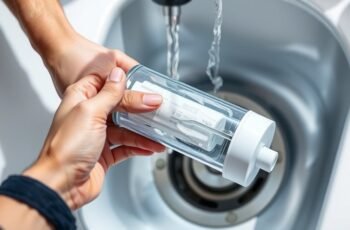
Once the water supply is confirmed to be off, we can proceed with removing and installing the post-filter. First, carefully disconnect the filter housing, noting the orientation and the existing filter materials to guarantee correct reinstallation. To remove the old filter, twist or unclip the housing according to your model’s installation techniques, avoiding excessive force. Inspect the filter materials inside, checking for debris or damage, and dispose of them properly. For installation, insert the new filter materials aligned precisely with the housing’s design, ensuring a proper seal. Secure the housing firmly, following the recommended installation techniques to prevent leaks. Finally, double-check all connections for tightness before restoring the water supply. Proper handling of filter materials and precise installation techniques are vital for peak performance.
Common Challenges and Troubleshooting During Post-Filter Replacement
Replacing the post-filter can present several common challenges that require careful troubleshooting to guarantee peak performance. One primary issue involves the filter material, which may shift or become misaligned during installation, affecting water flow and filtration efficiency. Ensuring the filter is correctly seated in its designated installation location is critical; improper positioning can cause leaks or bypass of unfiltered water. Tightening fittings without over-torquing is essential to prevent damage to the filter housing or connections. Additionally, debris or residual contaminants from previous filter materials can obstruct flow paths. If water flow remains inconsistent or leaks develop, rechecking the filter’s placement and inspecting for damage or debris usually resolves these issues. Precise attention to installation details helps maintain ideal system operation.
How Often Should You Change Your Water Ionizer Post-Filter?
The frequency of post-filter replacement in a water ionizer depends primarily on usage volume and water quality, but most manufacturers recommend changing the filter every 6 to 12 months. Regular filter maintenance is essential to sustain excellent water purification performance and prevent bacterial growth. The lifespan varies based on contaminant levels and water hardness, making routine inspection critical.
Key considerations include:
- Monitoring filter performance indicators and flow rate
- Testing water for contaminants that may accelerate filter saturation
- Following manufacturer guidelines for replacement intervals
- Ensuring proper installation to maintain filtration efficacy
Adhering to these practices ensures reliable water purification, extends filter lifespan, and preserves the integrity of your ionizer’s performance.
Tips for Maintaining Your Post-Filter and Extending Its Lifespan
Maintaining your post-filter properly can greatly extend its operational lifespan and guarantee consistent water quality. Regularly monitoring water mineralization levels helps prevent excessive buildup of mineral deposits, which can impair filtration efficiency. Implementing routine filter sterilization procedures is essential to eliminate bacteria and biofilms that may develop over time, ensuring the filter continues to perform at its best. Additionally, following the manufacturer’s recommended cleaning schedules and avoiding exposure to contaminants preserve the filter’s integrity. Proper maintenance minimizes clogging and prolongs effective filtration capacity, reducing the frequency of replacements. By adhering to these practices, you maximize your post-filter’s performance, maintain high water quality, and extend its lifespan, ensuring your water ionizer consistently produces clean, mineral-balanced water.
When to Consult Professional Service or Consider Upgrading Your Filter System
While routine maintenance can extend your post-filter’s lifespan, certain signs indicate it’s time to seek professional service or consider filter upgrade options. Persistent reduction in water flow, unusual taste or odor, increased filter replacement frequency, and visible clogging or sediment buildup signal that your system may require professional maintenance. Regularly scheduled filter evaluations by qualified technicians ensure peak performance and water quality. Upgrading your filter system might be necessary if current filters no longer meet your water quality needs or if technology advancements offer superior contaminant removal. Recognizing these indicators helps prevent system failure and maintains water purity. Consulting professionals ensures precise diagnostics and appropriate filter upgrade options, safeguarding your water filtration system’s efficiency and longevity.
Frequently Asked Questions
Can I Use a Generic Post-Filter Instead of the OEM Part?
Yes, you can use a generic post-filter, but we recommend checking filter compatibility to guarantee proper fit and function. While cost comparison favors generic options, OEM parts guarantee ideal performance and longevity, reducing potential maintenance issues.
What Are the Signs of Mold or Bacterial Growth in the Filter?
We check for mold and bacterial growth via bacterial indicators like slimy residues, discoloration, or musty odors. Regular maintenance and mold prevention practices help detect these signs early, ensuring filter safety and ideal water quality.
How Do Temperature and Water Pressure Affect Filter Lifespan?
Higher water temperature accelerates filter degradation, reducing durability, while excessive water pressure strains filter components, also shortening lifespan. Maintaining ideal water temperature and pressure ensures maximum filter durability and effective filtration performance over time.
Is It Safe to Reuse or Disinfect the Old Post-Filter?
Reusing or disinfecting the old post-filter isn’t recommended, as the filter material degrades over time, affecting replacement frequency and filtration efficiency. Proper disposal guarantees peak performance and prevents potential bacterial contamination, maintaining water quality and safety.
Are There Eco-Friendly or Biodegradable Filter Options Available?
We find biodegradable filters made from eco-friendly materials, offering sustainable options that reduce environmental impact. These filters maintain performance while decomposing naturally, making them a responsible choice for environmentally conscious users seeking effective water filtration.
Conclusion
Regularly replacing our water ionizer post-filter is vital for maintaining peak water quality and system efficiency. By staying vigilant for signs of wear and following proper procedures, we can guarantee clean, healthy water. Think of it as tending to a finely crafted clock—each component must be attended to, lest the whole mechanism falters. With routine upkeep, we preserve the integrity of our filtration system and enjoy the benefits of pure, ionized water for years to come.