Ad Blocker Detected
Our website is made possible by displaying online advertisements to our visitors. Please consider supporting us by disabling your ad blocker.
Think of your water ionizer as a finely tuned instrument, requiring precise handling and respect for its complexity. Ensuring its safe operation involves understanding how it functions, proper installation, and diligent maintenance, all essential to avoid potential hazards. Without careful attention, the risks of malfunction or unsafe water levels increase. To truly safeguard your household, it’s essential to follow specific protocols—yet many overlook these key steps, making it important to know what to watch for and how to prevent issues before they arise.
Key Takeaways
- Follow the manufacturer’s instructions carefully for installation, operation, and maintenance.
- Regularly clean electrodes and replace filters to prevent buildup and ensure water safety.
- Ensure proper placement away from heat, sunlight, and splash zones for safe and optimal operation.
- Calibrate the device periodically to maintain consistent pH levels and prevent health risks.
- Monitor for any malfunctions, unusual noises, leaks, or changes in water taste or pH, and seek professional help if needed.
Understand How a Water Ionizer Works and Its Safety Features
Although water ionizers are designed to enhance water quality, understanding their operation and safety features is essential for responsible use. These devices work by applying electrical currents to water through electrodes, which alters the pH balance, producing alkaline and acidic streams. Maintaining electrode integrity is critical; regular electrode maintenance prevents buildup that can affect ionization efficiency and safety. Proper calibration ensures consistent pH levels, safeguarding users from potential health risks associated with unbalanced water. Safety features, such as automatic shut-off and leakage protection, help prevent malfunctions. Being cautious about electrode condition and understanding how the ionizer influences pH balance allows us to operate the machine responsibly, guaranteeing both dependable performance and user safety at all times.
Proper Installation and Placement of Your Water Ionizer at Home
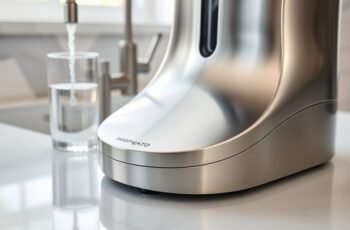
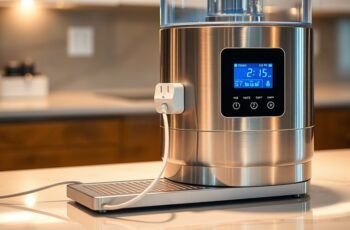
Proper installation and placement of your water ionizer are vital to guarantee peak performance and safety. The installation location should be level, stable, and free from excessive heat or direct sunlight, which could affect the unit’s functionality. Confirm the power source is grounded and complies with electrical safety standards to prevent hazards.
Proper placement and grounding ensure your water ionizer operates safely and efficiently.
- Select a dedicated, easily accessible space near your water supply and electrical outlet.
- Verify the power source has adequate voltage and is capable of supporting the ionizer’s power requirements.
- Avoid placing the unit near sinks or areas prone to water splashes to prevent electrical issues or damage.
Proper placement ensures excellent operation, safety, and longevity of your water ionizer.
Learn How to Use Your Water Ionizer Safely and Effectively
To guarantee safe and effective use of your water ionizer, we must follow specific operational guidelines diligently. Proper use guarantees optimal water purification and precise pH balancing, preventing potential health risks. Always verify the water source is clean before ionization. Adjust settings carefully, adhering to manufacturer instructions for desired pH levels. Avoid exceeding recommended water intake, especially with highly alkaline or acidic water. Use the following table as a quick reference:
| Parameter | Caution |
|---|---|
| Water source | Ensure it’s contaminant-free |
| pH settings | Use appropriate levels for health benefits |
| Water flow rate | Maintain recommended flow for efficiency |
| Consumption limits | Do not overconsume high pH or low pH water |
Consistent adherence minimizes risks and maximizes benefits of water purification and pH balancing.
Regular Maintenance and Filter Changes to Ensure Safe Operation
Regular maintenance and timely filter changes are essential to guarantee your water ionizer operates safely and effectively. Proper care directly impacts water quality and the overall lifespan of your device. Neglecting these tasks can lead to decreased filtration efficiency and potential health risks.
To ensure peak performance:
- Monitor the filter lifespan regularly, replacing filters as recommended by the manufacturer.
- Clean the mineral and electrode plates periodically to prevent mineral buildup.
- Conduct routine inspections of internal components for signs of wear or corrosion.
Adhering to these steps preserves water quality, maintains safe operation, and extends the longevity of your water ionizer. Consistent maintenance is a cautious, necessary practice to prevent issues and ensure safe, clean water at home.
Common Mistakes to Avoid When Using a Water Ionizer
While using a water ionizer at home, it’s crucial to avoid common mistakes that can compromise safety and device longevity. Overuse hazards are a primary concern; exceeding recommended usage can lead to chemical reactions within the system, potentially damaging internal components or producing unintended byproducts. Ignoring manufacturer guidelines on water quality and filtration can also increase the risk of mineral buildup or chemical reactions that impair performance. Additionally, using the machine continuously without proper maintenance may cause buildup of impurities, increasing safety hazards. To prevent these issues, we must adhere strictly to operational instructions, avoid overloading the system, and guarantee regular cleaning and filter replacement. Being cautious about these mistakes helps maintain safe operation and peak ionizer performance over time.
Recognize Signs of Malfunction and When to Seek Professional Help
Understanding the signs of malfunction in your water ionizer is essential for guaranteeing safe and effective operation. Recognizing malfunction indicators early can prevent damage and uphold water quality.
Early detection of water ionizer issues ensures safety, maintains water quality, and prevents costly repairs.
- Unusual noises or persistent leaks suggest mechanical issues needing immediate attention.
- Changes in water taste, odor, or pH levels can indicate filtration or electrical malfunction.
- Error messages on the device display or inconsistent alkaline/mineral output are clear indicators that professional diagnostics are required.
If any of these signs appear, do not attempt to repair the unit yourself. Instead, consult a qualified technician to perform thorough diagnostics. Prompt professional intervention helps prevent further damage, maintains water safety, and guarantees your ionizer functions at its best.
Tips for Ensuring Your Family Drinks Safe, Alkaline Water Every Day
To guarantee your family consistently drinks safe, alkaline water, regular filter maintenance is essential to prevent contaminants. Proper machine settings must be verified to maintain desired pH levels and avoid over-alkalinity. Additionally, safe water storage practices help preserve water quality and prevent recontamination.
Regular Filter Maintenance
Regular filter maintenance is vital to guarantee that your water ionizer consistently produces safe, high-quality alkaline water. Over time, filters reach their lifespan and become prone to mineral buildup, which can compromise filtration efficiency and water safety. Neglecting timely maintenance risks contaminated water and reduced ionizer performance.
To assure optimal operation:
- Monitor filter lifespan closely, replacing filters according to manufacturer recommendations.
- Regularly inspect for mineral buildup, cleaning or replacing filters as needed.
- Use appropriate cleaning agents designed for mineral deposits to prevent clogging and maintain filtration integrity.
Adhering to these steps helps avoid contamination, preserves water quality, and extends the lifespan of your filtration system. Proper filter maintenance is vital for safe, reliable alkaline water every day.
Proper Machine Settings
Once your filters are properly maintained, setting your water ionizer correctly becomes essential to guarantee the safety and consistency of your alkaline water. Accurate machine calibration ensures the water pH aligns with safe standards, preventing overly acidic or alkaline outputs. We recommend regularly verifying the settings according to manufacturer guidelines. Use the following calibration table as a reference:
| Water pH Range | Adjustment Method | Safety Tip |
|---|---|---|
| 8.5 – 9.5 | Use calibration solutions | Monitor pH daily |
| 9.5 – 10.5 | Fine-tune electrode adjustments | Avoid exceeding 10.5 |
| >10.5 | Reset to default, re-calibrate | Consult professional |
Consistent calibration guarantees your family drinks safe, alkaline water, minimizing health risks.
Safe Water Storage
Proper storage of alkaline water is essential to maintaining its safety and health benefits. To preserve water quality, we recommend selecting appropriate storage containers.
- Use BPA-free, non-reactive containers made of glass or high-quality stainless steel, as plastics can leach chemicals over time.
- Store water in a cool, dark place away from direct sunlight, which can alter pH levels and degrade water quality.
- Guarantee containers are airtight to prevent contamination and maintain alkalinity, especially if storing water for extended periods.
Frequently Asked Questions
Can Children Safely Drink Water From a Water Ionizer?
Children’s safety is paramount; generally, they can drink water from a water ionizer if it meets child safety and drinking guidelines. However, consult healthcare professionals to verify proper pH levels and avoid potential health risks for kids.
Is It Safe to Use Tap Water With a Water Ionizer?
Using tap water with a water ionizer is generally safe if the water’s pH balance and mineral content meet quality standards. We recommend testing your tap water to verify it’s free from contaminants before ionization.
How Long Does a Typical Water Ionizer Filter Last?
Typically, a water ionizer filter’s lifespan ranges from six to twelve months, depending on usage and water quality. We recommend adhering to the manufacturer’s maintenance schedule and regularly monitoring filter performance for best safety and efficiency.
Can a Water Ionizer Remove All Contaminants From Water?
We understand water ionizers excel at contaminant filtration and mineral retention, but they can’t remove all contaminants. While they improve water quality, we should remain cautious, understanding their limitations in achieving complete purification.
Are There Health Risks Associated With Drinking Alkaline Water Regularly?
Drinking alkaline water regularly may disrupt alkaline balance, potentially causing mineral imbalances or acid reflux. We advise caution, especially if you have health conditions, and recommend consulting a healthcare professional to understand risks and proper intake levels.
Conclusion
By adhering to proper installation, regular maintenance, and safety protocols, we can guarantee our water ionizer operates reliably. Imagine the steady flow of clean, alkaline water, safely nourishing our families each day. Vigilance in monitoring device performance and recognizing early signs of malfunction safeguards us from potential hazards. With careful attention and professional support when needed, we create a secure environment where technology serves our health—precisely like a well-calibrated instrument, always ready to deliver safe, life-enhancing water.