Ad Blocker Detected
Our website is made possible by displaying online advertisements to our visitors. Please consider supporting us by disabling your ad blocker.
Maintaining a water ionizer requires a precise and methodical approach to guarantee ideal performance and longevity. We recognize that regular cleaning, descaling, and timely replacement of components are critical, but the specific intervals and procedures can vary. Developing a thorough maintenance schedule tailored to your device’s use and water quality is essential, yet many overlook key steps that could compromise its efficiency. Let’s explore the critical aspects that keep your water ionizer functioning at peak levels.
Key Takeaways
- Perform thorough cleaning every 1-3 months and follow manufacturer guidelines.
- Descale water pathways quarterly using vinegar-water solution to prevent mineral buildup.
- Replace filters every 6-12 months and electrodes every 12-24 months based on usage.
- Regularly inspect and clean electrodes, filters, and water channels to maintain performance.
- Schedule seasonal maintenance, including cleaning and component checks, to ensure optimal operation year-round.
How Often Should You Clean Your Water Ionizer?
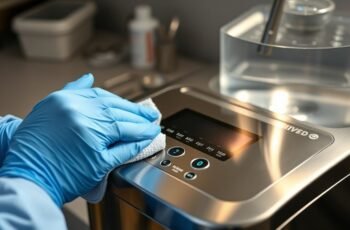
The frequency of cleaning your water ionizer depends on usage and water quality, but generally, it’s recommended to perform a thorough cleaning at least once every one to three months. Maintaining an ideal cleaning frequency is essential for preserving device efficiency and ensuring water purity. Our maintenance checklist emphasizes regular inspections of filters, electrodes, and internal components to prevent mineral buildup and biofilm formation. Precise adherence to this schedule helps avoid clogging and contamination that could compromise water ionization quality. Technical vigilance during cleaning involves observing manufacturer guidelines for cleaning agents and procedures. By establishing a disciplined cleaning frequency, you minimize operational issues and extend your water ionizer’s lifespan, ensuring consistent performance and high-quality water output.
How to Descale Your Water Ionizer Effectively
Over time, mineral deposits and scale buildup can impair the performance of your water ionizer, reducing its efficiency and compromising water quality. Effective descaling requires precise cleaning techniques to remove mineral buildup without damaging components. We recommend the following approach:
- Prepare a descaling solution using equal parts white vinegar and water, ensuring a non-abrasive, natural agent.
- Circulate the solution through the water pathways for 15-20 minutes, focusing on areas with visible scale.
- Rinse thoroughly with clean water, running multiple cycles to eliminate residual acidity and mineral deposits.
This process guarantees thorough removal of mineral buildup, restoring peak function. Regular descaling using these cleaning techniques prolongs your water ionizer’s lifespan and maintains water purity.
When to Replace Filters and Electrodes
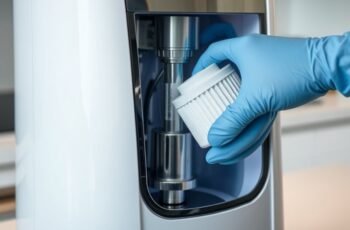
Monitoring the condition of filters and electrodes is essential for maintaining ideal water quality and ionizer performance. The filter lifespan varies depending on usage and water quality but typically ranges between six to twelve months. Regular inspection of filter indicators or testing water TDS levels can help determine when replacement is necessary. Electrode replacement is more critical; electrodes usually require replacement every 12 to 24 months, depending on water hardness and usage intensity. Signs such as decreased ionization efficiency, inconsistent pH levels, or visible buildup indicate it’s time for electrode maintenance. Precise timing for filter and electrode replacement ensures maximum performance and prevents mineral buildup that can compromise water quality. Adhering to these replacement intervals prolongs your device’s lifespan and guarantees consistent, high-quality ionized water.
Troubleshooting Common Maintenance Issues
Regularly inspecting filters and electrodes helps maintain ideal water quality, but issues can still arise that hinder performance. Common problems include decreased electrolysis efficiency, inconsistent pH levels, and water flow restrictions. To troubleshoot effectively:
- Verify if the filter lifespan has been exceeded, as degraded filters compromise water quality and reduce electrolysis effectiveness.
- Clean electrodes thoroughly to remove mineral buildup, which impairs ion exchange and causes irregular pH output.
- Check for blockages in water channels or filters that restrict flow, negatively impacting overall performance and user experience.
Addressing these issues systematically ensures optimal operation, prolongs component lifespan, and sustains consistent water quality. Regular maintenance and precise troubleshooting are essential for reliable water ionizer performance.
Tips for Maintaining Peak Performance Year-Round
To maintain peak performance of your water ionizer throughout the year, it’s essential to implement a consistent maintenance routine tailored to seasonal variations and usage patterns. Regularly monitor water quality, as contaminants or mineral buildup can impair ionization efficiency, reducing water quality and compromising energy efficiency. We recommend scheduling quarterly filter replacements and descaling procedures, especially during periods of high mineral content or fluctuating water sources. Ensuring proper cleaning of electrodes and flow paths minimizes mineral deposits that hinder performance. By maintaining ideal electrode conditions and water purity, you preserve energy efficiency and extend device lifespan. Additionally, inspecting seals and connections prevents leaks that could affect operation. A meticulous, seasonally adjusted maintenance schedule guarantees sustained water quality and energy-efficient operation year-round.
Frequently Asked Questions
Can I Use Vinegar to Clean My Water Ionizer?
Yes, you can use vinegar to clean your water ionizer, but only occasionally. We recommend following proper descaling techniques and adhering to the recommended cleaning frequency to prevent mineral buildup and maintain ideal performance.
How Do I Know if My Electrodes Are Worn Out?
We check electrode lifespan regularly, like monitoring a ship’s essential signs, and look for wear indicators such as decreased alkaline levels or irregular pH shifts, signaling our electrodes are nearing the end of their functional voyage.
What’s the Best Storage Method for Spare Filters?
We recommend storing spare filters in a cool, dry, dark environment, sealed in airtight containers to prevent contamination. Proper storage tips guarantee ideal filter replacement performance, maintaining filter longevity and ensuring consistent water ionizer efficiency over time.
Are There Specific Cleaning Products to Avoid?
We avoid harsh chemical cleaners that can trigger unwanted chemical reactions and negatively impact the environment. Instead, we recommend using manufacturer-approved, eco-friendly cleaning solutions to maintain your water ionizer’s performance while minimizing environmental impact.
How Long Should a Typical Water Ionizer Last?
A typical water ionizer lasts around 10-15 years, depending on water quality and maintenance. Proper cleaning enhances energy efficiency and prolongs lifespan, ensuring consistent performance while preventing mineral buildup and corrosion within the system components.
Conclusion
Maintaining our water ionizer diligently guarantees peak performance and longevity. Regular cleaning every 1-3 months, along with timely filter and electrode replacements, minimizes buildup and prevents malfunctions. Studies show that proper maintenance can extend device lifespan by up to 30%, saving costs and ensuring consistent water quality. By adhering to a meticulous schedule and troubleshooting proactively, we can maximize efficiency and durability, ultimately guaranteeing the health benefits of clean, ionized water for years to come.