Ad Blocker Detected
Our website is made possible by displaying online advertisements to our visitors. Please consider supporting us by disabling your ad blocker.
Did you know that mineral buildup on water ionizer electrodes can reduce efficiency by up to 30%? Maintaining clean electrodes is essential for consistent pH levels and ideal performance, yet many users overlook this important step. Proper cleaning not only preserves water quality but also extends the lifespan of your device. Understanding the proper techniques and timing for electrode maintenance is necessary—so, let’s explore the key aspects that keep your system running smoothly.
Key Takeaways
- Regularly clean electrodes to remove mineral buildup and prevent performance decline.
- Use appropriate, non-abrasive cleaning solutions compatible with electrode materials.
- Disconnect power and gently scrub electrodes with soft brushes during cleaning.
- Store cleaning tools properly and utilize distilled water to avoid additional deposits.
- Seek professional help for persistent fouling or visible damage to ensure optimal electrode function.
Understanding Why Electrode Cleaning Matters for Water Ionizers
Understanding why electrode cleaning matters for water ionizers is essential because mineral buildup and contaminant deposits directly impair electrode efficiency and longevity. The electrode material, typically titanium coated with platinum or other conductive layers, relies on clean surfaces to maintain peak electrolysis. Accumulated deposits alter the water pH balance by interfering with ion exchange processes, leading to unstable or inaccurate pH levels. When minerals such as calcium or magnesium adhere to the electrode surface, they hinder the generation of alkaline or acidic water, reducing the device’s effectiveness. Regular cleaning preserves the integrity of the electrode material, ensuring consistent pH output and preventing corrosive damage. Maintaining clean electrodes guarantees reliable performance, prolongs lifespan, and sustains the precise water pH balance necessary for health benefits.
Signs Your Water Ionizer Electrodes Need Cleaning
When a water ionizer’s electrodes become fouled with mineral deposits or contaminants, the device’s performance begins to decline noticeably. Signs include irregular water pH levels, which can fluctuate outside the expected range, indicating compromised electrolysis. Electrode corrosion may also be visible as a rough or pitted surface, reducing efficiency. You might notice a decrease in alkalinity or acidity of the output water, signaling that mineral buildup is hindering *best* ion exchange. Additionally, increased operating noise or a drop in overall output quality can be symptoms of fouled electrodes. If these issues persist despite regular use, it’s a clear sign that cleaning is necessary to restore proper function and prevent further damage from corrosion or mineral accumulation.
Gathering the Right Tools and Supplies for Electrode Cleaning
To guarantee effective electrode cleaning, we must assemble specific supplies such as non-abrasive brushes, pH-neutral cleaning solutions, and soft cloths. Selecting appropriate tools, like plastic or nylon scrapers and precision screwdrivers, is vital to avoid damaging components. Additionally, proper storage methods, including labeled containers and dry environments, help maintain tool integrity and readiness for maintenance.
Essential Cleaning Supplies
What specific tools and supplies are essential for effectively cleaning water ionizer electrodes? We start with non-abrasive, acid-neutral cleaning solutions compatible with various electrode materials, such as titanium or platinum-coated plates. Soft-bristled brushes or microfiber cloths are vital to avoid scratching delicate surfaces while removing mineral buildup. Since water quality impacts cleaning efficacy, distilled or deionized water is necessary to prevent additional mineral deposits. We also need plastic or rubber spatulas to gently dislodge deposits without damaging the electrode surfaces. Calibration and testing equipment, like pH meters or electrode cleaners, help verify cleaning effectiveness. Selecting supplies compatible with specific electrode materials ensures thorough cleaning without corrosion, preserving peak ionizer performance and prolonging lifespan.
Recommended Tool Types
Selecting the appropriate tools for electrode cleaning is essential to maintain ideal ionizer performance while preventing damage to sensitive surfaces. The choice of tool depends heavily on the electrode material—whether titanium, platinum-coated, or other composites—as each material responds differently to cleaning agents. Soft-bristled brushes, non-abrasive sponges, and microfiber cloths are recommended to avoid scratching or pitting, especially with delicate electrode surfaces. For routine cleaning, based on the cleaning frequency, plastic or silicone tools are sufficient, but more intensive cleaning may require specific cleaning pads or tools designed for mineral deposits. Using improperly matched tools can cause surface damage or reduce electrode lifespan. Always select tools that are compatible with your electrode’s material and adhere to recommended cleaning intervals to guarantee proper ionizer function.
Proper Storage Methods
Proper storage practices for electrode cleaning tools and supplies play a vital role in maintaining their effectiveness and preventing contamination. Ensuring storage safety involves keeping tools in a dry, disinfected environment, away from chemicals or extreme temperatures. Properly labeled containers facilitate regular cleaning frequency by reminding us when to replenish or sanitize supplies. To optimize storage, consider organizing tools based on their function and material compatibility, reducing cross-contamination risk. The table below summarizes essential storage guidelines:
| Storage Safety | Cleaning Frequency | Recommended Supplies |
|---|---|---|
| Keep tools dry | Weekly for regular use | Distilled water, brushes |
| Store in sealed containers | After each cleaning | Non-abrasive cloths |
| Avoid chemical exposure | Monthly inspection | Cleaning solutions |
Step-by-Step Guide to Safely Cleaning Your Water Ionizer Electrodes
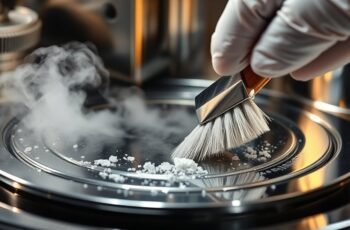
To guarantee ideal performance and longevity of your water ionizer, it’s essential to clean the electrodes regularly and correctly. Begin by identifying your electrode material—whether titanium, platinum-coated, or other composites—as cleaning methods vary accordingly. Before starting, disconnect the power supply and remove the electrode assembly. Prepare a cleaning solution suitable for your electrode material, such as a diluted acid or specialized descaling agent. Using a soft brush or non-abrasive cloth, gently scrub the electrode surfaces to remove mineral deposits, paying close attention to crevices. Adhere to the recommended cleaning frequency specified by the manufacturer—typically every 3 to 6 months—to prevent mineral buildup without causing damage. Rinse thoroughly with purified water, then reassemble and test the unit for excellent operation.
Best Practices for Regular Maintenance and Preventing Mineral Buildup
Establishing a consistent cleaning schedule is crucial to prevent mineral buildup and guarantee peak electrode performance. Incorporating appropriate descaling agents, such as citric acid or commercial descalers, helps dissolve accumulated deposits effectively. Adhering to precise timing and solution concentrations maintains electrode integrity and prolongs device lifespan.
Regular Cleaning Schedule
Implementing a consistent cleaning schedule is vital for maintaining the ideal performance of your water ionizer electrodes and preventing mineral buildup. Regular cleaning directly impacts water quality by reducing mineral deposits that can impair ionization efficiency. To maximize electrode durability, it’s essential to establish a routine based on water hardness levels and usage frequency. For instance, in areas with hard water, cleaning every one to two months may be necessary, while softer water may require less frequent maintenance. Precise timing prevents mineral accumulation, which can cause uneven ionization and electrode degradation over time. Documenting each cleaning cycle helps identify patterns and guarantees adherence to best practices. Ultimately, a well-maintained schedule sustains high water quality, extends electrode lifespan, and maintains peak ionizer performance.
Use of Descaling Agents
Using descaling agents effectively is essential for preventing mineral buildup on water ionizer electrodes, especially in regions with hard water. Proper application of descaling solutions dissolves calcium and magnesium deposits that impair electrode efficiency, ensuring ideal pH balance and consistent alkalinity or acidity of the water. Regular use maintains electrode surface integrity, which directly influences flavor enhancement by preventing off-tastes caused by mineral residues. When selecting descaling agents, opt for food-grade, non-corrosive solutions compatible with your device’s materials. Follow manufacturer instructions precisely, typically involving soaking or circulating the solution through the system for a specified duration. This proactive maintenance minimizes mineral accumulation, preserves electrode performance, and guarantees the water’s pH remains accurately balanced for best taste and health benefits.
How to Choose the Right Cleaning Solutions for Your Electrodes?
How can we guarantee that we’re selecting the most effective cleaning solutions for our water ionizer electrodes? The key is understanding the electrode material—stainless steel, platinum, or titanium—as each reacts differently to cleaning agents. We need solutions that effectively remove mineral buildup without damaging the electrode surface or compromising its conductivity. Additionally, cleaning frequency influences solution choice; more frequent cleaning requires milder agents to prevent wear, while infrequent cleaning might necessitate stronger solutions. We should opt for pH-neutral or specialized descaling agents formulated for our electrode’s material, avoiding corrosive chemicals. Properly matching the cleaning solution to the electrode material and adhering to recommended cleaning intervals ensures maximum performance and longevity of the electrodes.
Troubleshooting Common Electrode Cleaning Challenges
Despite selecting appropriate cleaning solutions based on electrode material and frequency, users often encounter specific challenges that hinder ideal maintenance. Electrode design intricacies can cause uneven scaling or stubborn deposits, especially in models with complex geometries. Water filtration inconsistencies may introduce mineral buildup or residual contaminants, complicating cleaning efforts. To troubleshoot effectively:
Electrode design and water filtration issues can cause stubborn deposits, requiring targeted cleaning and regular inspections.
- Inspect electrode surfaces regularly for uneven scaling or residue, considering design features that trap deposits.
- Verify water filtration systems are functioning properly, preventing mineral deposits from adhering excessively.
- Use targeted cleaning methods, such as ultrasonic cleaning or gentle scrubbing, to address deposits rooted in electrode design or filtration issues.
Understanding these factors helps maximize cleaning, prolongs electrode lifespan, and maintains peak ionization performance.
When to Seek Professional Help for Electrode Maintenance?
Persistent electrode staining, unusual water odors, or a noticeable decline in ionizer efficiency indicate that professional intervention may be necessary. These issues often stem from complex mineral buildup or internal component degradation that requires specialized cleaning and testing equipment. Recognizing these signs early helps maintain peak performance and prevents long-term damage.
Persistent Electrode Staining
Have you noticed stubborn stains on your water ionizer electrodes that resist standard cleaning methods? Persistent electrode staining often indicates underlying issues such as electrode corrosion or an imbalance in water pH. When stains persist despite thorough cleaning, it’s essential to evaluate the following:
- Electrode corrosion levels, which can accelerate staining and damage the electrode surface, impairing efficiency.
- Water pH balance, as improper pH levels can promote mineral deposits and staining.
- Electrode material integrity, since degraded materials are more prone to staining and corrosion.
If these factors do not improve with routine maintenance, professional intervention becomes necessary. Addressing electrode corrosion and water pH imbalance promptly helps prevent long-term damage and guarantees peak ionizer performance.
Unusual Water Odors
Unusual odors in the water produced by your ionizer often signal underlying issues with electrode maintenance that go beyond surface stains. These odors can indicate biofilm buildup or mineral deposits affecting electrode performance, which compromises flavor enhancement and water clarity. When persistent or foul-smelling water occurs despite cleaning, it suggests that electrode surfaces require professional attention. Such issues may involve complex mineral scaling or microbial contamination that simple cleaning can’t resolve. Ignoring these odors can lead to further deterioration of water quality and potential health risks. If odor persists after routine maintenance, it’s essential to seek professional electrode servicing. Proper diagnosis and professional cleaning restore ideal flavor, improve water clarity, and prevent long-term damage to your ionizer’s electrodes.
Decreased Ionizer Efficiency
When your water ionizer begins producing water with noticeably reduced mineralization or diminished pH balance, it indicates a decline in electrode efficiency that routine cleaning may not resolve. This drop in performance often results from mineral deposits or corrosion affecting the electrode materials, impairing their ability to facilitate ion exchange effectively. Recognizing when to seek professional help is essential. Consider these indicators:
- Significant decrease in water quality, with less ionization and inconsistent pH levels.
- Persistent buildup of mineral deposits despite standard cleaning.
- Visible damage or corrosion on electrodes, suggesting material degradation.
In such cases, specialized cleaning or electrode replacement by professionals is necessary to restore peak functionality, ensuring the water quality remains high and electrode materials are preserved.
Tips for Extending the Lifespan of Your Water Ionizer Electrodes
To maximize the lifespan of your water ionizer electrodes, regular maintenance and cleaning are vital, as mineral buildup and corrosion can considerably impair their performance over time. Water quality plays an important role; using filtered or low-mineral content water reduces scaling risk. Understanding electrode materials is key—platinum-coated titanium is more resistant to corrosion, but even these materials require periodic cleaning to prevent mineral deposits that hinder ion exchange efficiency. Implementing a routine cleaning schedule, based on your water’s hardness, helps remove calcium and magnesium buildup before they cause damage. Additionally, monitoring electrode surface condition and avoiding aggressive cleaning agents preserves electrode integrity. Proper maintenance tailored to your water source and electrode composition ensures maximum performance and extends service life.
Final Tips to Keep Your Water Ionizer Performing at Its Best
Maintaining peak performance from your water ionizer requires consistent attention to both its cleaning regimen and operational practices. To optimize functionality, consider integrating historical water treatment principles, which emphasize the importance of mineral balance, with eco-friendly cleaning methods that reduce chemical use. Regularly monitor electrode mineral buildup to prevent efficiency loss.
Final tips include:
- Implement periodic descaling using biodegradable, non-toxic solutions to preserve electrode integrity.
- Schedule routine cleaning with natural agents like vinegar or citric acid, aligning with eco-friendly practices.
- Guarantee water quality aligns with historical water treatment standards to minimize impurities that could impair performance.
These practices safeguard electrode longevity and ensure your water ionizer operates at maximum efficiency.
Frequently Asked Questions
Can I Use Household Vinegar to Clean Water Ionizer Electrodes?
Yes, vinegar effectiveness is limited for cleaning water ionizer electrodes; it’s an alternative cleaner, but we recommend specialized descaling solutions for thorough results, as vinegar may not effectively remove mineral buildup and can harm electrode surfaces over time.
How Often Should I Perform Electrode Cleaning for Optimal Performance?
We recommend electrode maintenance every 1-3 months, depending on usage and mineral buildup. Establish a cleaning schedule that aligns with water quality and monitor electrode performance regularly to guarantee ideal ionizer efficiency and longevity.
Are There Any Safety Precautions During Electrode Cleaning?
Think of safety precautions as a shield; we always wear safety gear and guarantee electrical safety during electrode cleaning. We disconnect power, wear gloves, and handle components carefully, preventing electrical hazards and protecting ourselves from harmful chemical exposure.
Can Improper Cleaning Damage My Water Ionizer?
Improper cleaning can cause electrode corrosion, damaging your water ionizer. We recommend maintaining the correct cleaning frequency and using appropriate solutions to prevent harm, ensuring ideal performance and longevity of your device.
What Are the Environmental Impacts of Cleaning Solutions Used?
Cleaning solutions can leave chemical residues that contaminate water, contributing to water pollution. We carefully select eco-friendly agents, minimizing environmental impacts and ensuring that cleaning processes don’t turn our water system into a toxic wasteland.
Conclusion
In conclusion, regular electrode cleaning is vital for maintaining optimal ionizer performance and longevity. We understand it might seem intimidating, but with the right tools and techniques, it becomes a straightforward routine. Consistent maintenance prevents mineral buildup, guarantees stable pH levels, and prolongs your device’s lifespan. Embracing these detailed procedures now saves you time and expense later, ultimately providing you with clean, healthy water and a reliable system that performs at its best every day.