Ad Blocker Detected
Our website is made possible by displaying online advertisements to our visitors. Please consider supporting us by disabling your ad blocker.
Water quality is the foundation upon which the benefits of a water ionizer are built, much like the bedrock beneath a structure. Before we install or rely on such a device, it’s vital to understand what’s lurking in the source water beneath the surface. Proper testing ensures peak performance and safety, but it’s a process that demands precision and informed decision-making. As we explore the methods and standards involved, you’ll see why thorough analysis is a critical step in safeguarding your water’s integrity.
Key Takeaways
- Use sterile bottles and fill completely to prevent air exposure during sampling.
- Conduct initial tests for pH, mineral content, and contaminants using home or lab analysis.
- Rinse sampling equipment thoroughly with source water before collecting samples.
- Seal and label samples with date, time, and location for accurate tracking.
- Compare test results to safety standards to determine water suitability for ionization.
How to Collect a Water Sample for Testing
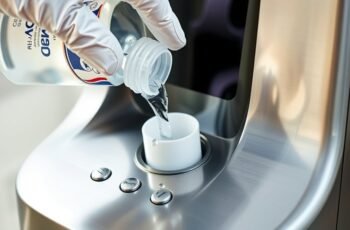
When collecting a water sample for testing, it’s essential to follow a standardized procedure to guarantee accurate results. Proper water sample storage is critical to prevent contamination or alteration of water chemistry. We recommend using high-quality sampling equipment, such as sterile bottles and appropriate preservatives if necessary. Before sampling, ensure all equipment is thoroughly cleaned and rinsed with the source water to avoid introducing foreign substances. Fill the container completely to minimize air exposure, seal it tightly, and label it with relevant details like date, time, and location. Maintaining consistent procedures across samples ensures the data’s reliability. Proper handling and storage of the sample, typically in a cool, dark place, preserve its integrity until it reaches the laboratory for analysis.
Understanding Your Water’s pH and Mineral Content
Understanding your water’s pH and mineral content is essential because these parameters directly influence the water’s chemical stability, taste, and suitability for use with an ionizer. Accurate assessment of pH balance guides adjustments needed to maximize ionization efficiency and prevent equipment corrosion. Water filtration plays a critical role in modifying mineral content, removing excessive calcium, magnesium, or other elements that can affect pH stability. Analyzing mineral levels helps determine whether the water requires pre-treatment to achieve desired pH levels or to enhance ionizer performance. Precise measurement of pH and mineral content ensures the water’s compatibility with the ionizer, ultimately improving water quality and guaranteeing the longevity and effectiveness of the device. This understanding forms the foundation for reliable, safe, and effective water ionization.
Testing for Contaminants and Harmful Substances
Testing for contaminants and harmful substances is a critical step in guaranteeing water safety before using a water ionizer. Evaluating water quality involves analyzing contaminant levels that could pose health risks or compromise ionizer performance. We focus on identifying substances such as heavy metals, pesticides, nitrates, and bacteria, which may be present even in seemingly clean sources. Precise testing reveals the extent of contamination and helps determine if pre-treatment is necessary. Monitoring contaminant levels allows us to judge whether the source water meets safety standards and supports ideal ionization. By thoroughly analyzing these substances, we guarantee that the water’s quality is suitable for health benefits without introducing potential toxins or impurities into the system.
Using Home Test Kits vs. Professional Laboratory Tests
When choosing between home test kits and professional laboratory analyses, we must consider the accuracy and reliability of each method, especially for detecting specific contaminants. Cost and convenience also influence our decision, as home kits are more accessible and quicker, but often less precise. Ultimately, understanding the strengths and limitations of each approach helps guarantee thorough water quality assessment before using a water ionizer.
Accuracy and Reliability
How can we guarantee the accuracy and reliability of water quality assessments before installing a water ionizer? Ensuring precise measurements of water filtration effectiveness and pH levels requires careful consideration of testing methods. Home test kits offer convenience but often lack the sensitivity needed for detailed analysis, potentially leading to inconsistent results. Professional laboratory tests, on the other hand, utilize advanced instrumentation to accurately measure water quality parameters, including pH levels and contaminant concentrations. These tests provide a reliable assessment of source water, minimizing false positives or negatives. Ultimately, combining initial home testing with confirmatory laboratory analysis guarantees that water quality evaluations are both accurate and dependable, which is critical for optimizing the performance of a water ionizer and safeguarding health.
Cost and Convenience
Balancing cost and convenience is a key consideration when choosing between home test kits and professional laboratory analyses for evaluating source water quality. While home kits offer rapid results and ease of use, they often perpetuate water quality myths and testing misconceptions, leading users to underestimate or overlook certain contaminants. Professional lab testing, though more costly and time-consuming, provides exhaustive, accurate data essential for informed decisions. Cost-effective testing methods can be appealing, but they might sacrifice reliability, risking false assurance or unnecessary repairs. Conversely, lab analyses eliminate ambiguities associated with DIY testing, ensuring precise identification of contaminants. Ultimately, understanding the limitations and benefits of each approach helps in making strategic choices aligned with specific water quality concerns, rather than relying solely on convenience or superficial assessments.
Detection of Contaminants
Are home test kits sufficient for accurately detecting the range of contaminants present in source water? While these kits can identify common issues like nitrates, pH, or chlorine, they often lack the sensitivity and specificity needed for comprehensive water purification assessments. Contaminant sources such as industrial runoff, agricultural chemicals, or heavy metals require precise detection methods offered by professional laboratory testing. Laboratory analyses provide detailed profiles of contaminants, including trace levels of toxic substances that home kits might overlook. Relying solely on home testing can lead to incomplete understanding of water quality, potentially compromising health and the effectiveness of your water ionizer. Consequently, for thorough detection of contaminants, especially from complex or suspected pollution sources, professional testing remains the most reliable approach.
Interpreting Test Results and What They Mean
When interpreting test results, we focus on understanding key parameters such as pH, contaminants, and mineral levels, which directly impact water quality. Comparing these results to established safety standards helps us evaluate whether the water is suitable for ionization and consumption. Recognizing specific contaminant indicators allows us to identify potential health risks that may require further treatment or testing.
Understanding Test Parameters
Understanding test parameters is essential for accurately interpreting water analysis results, as these metrics provide critical insights into water quality and safety. Recognizing key indicators allows us to assess whether the source water meets the necessary standards for ionizer use. Testing procedures typically measure parameters such as pH, total dissolved solids (TDS), turbidity, and contaminants.
- Identifying high levels of harmful substances triggers immediate concern and action.
- Low pH values indicate acidic water that could damage the ionizer.
- Elevated TDS suggests mineral content that affects water taste and safety.
- Turbidity levels reveal particulate presence, impacting water clarity and health risks.
Comparing Results to Standards
Interpreting test results requires a precise comparison between measured water parameters and established safety standards to determine suitability for ionizer use. Accurate assessment guides decisions on water treatment and filtration systems, guaranteeing contaminants are within acceptable limits. To facilitate this, we analyze key parameters such as pH, heavy metals, and microbial presence. The following table summarizes typical standards:
| Parameter | Standard Limit | Implication for Water Treatment |
|---|---|---|
| pH | 6.5 – 8.5 | Adjust with filtration or neutralization |
| Heavy Metals | Below EPA limits | Requires advanced filtration systems |
| Microbial Contaminants | Zero detectable presence | Necessitates sterilization measures |
Matching results against these standards ensures safe, high-quality source water for your water ionizer.
Recognizing Contaminant Indicators
Recognizing contaminant indicators in water test results is essential for evaluating source water quality and ensuring safe use with a water ionizer. Identifying specific contaminants helps pinpoint contaminant sources and assess water safety risks. Key indicators include elevated levels of heavy metals, such as lead or mercury, which signal potential industrial pollution. Unusual pH levels or high turbidity suggest organic or inorganic pollutants. The presence of nitrates or nitrites can indicate agricultural runoff, compromising water safety. *Finally*, detecting bacteria like E. coli points to microbial contamination and possible sewage intrusion. Understanding these indicators enables us to determine if the water is suitable for ionization or requires filtration, safeguarding health and optimizing the performance of your water ionizer.
Identifying Necessary Water Pre-Treatment Steps
Before installing a water ionizer, we must determine whether the source water requires pre-treatment to guarantee peak performance and longevity of the unit. Essential steps include evaluating water quality through detailed testing, focusing on parameters like contaminant levels, mineral content, and pH. If high levels of dissolved solids or specific contaminants are present, water filtration becomes necessary to remove impurities that could impair ionizer function or cause scaling. Additionally, pH balancing is critical; water that is too acidic or alkaline can affect ionization efficiency and electrode lifespan. Implementing appropriate pre-treatment steps ensures stable pH levels and reduces mineral buildup, ultimately enhancing the durability of the water ionizer and guaranteeing ideal ionization performance. Accurate assessment guides effective pre-treatment, preventing damage and maintaining water quality.
Choosing the Right Water Ionizer Based on Test Findings
Once we have the test results detailing water quality parameters, selecting the appropriate water ionizer becomes a targeted process rooted in technical compatibility. We analyze factors like water filtration needs and pH balancing capacity to guarantee ideal performance. An ideal ionizer should match the water’s mineral content and contaminant levels, preventing damage and maximizing benefits.
Selecting a water ionizer requires matching it to water quality for optimal performance and protection.
- Prioritize models with advanced water filtration for removing impurities revealed in tests
- Choose units with adjustable pH settings to achieve desired pH balancing
- Guarantee compatibility with high or low mineral levels based on test data
- Opt for reliable brands that provide precise control over ionization parameters
This approach guarantees that the water ionizer effectively enhances water quality, aligning with the specific source water profile.
Maintaining Water Quality Over Time After Testing
Maintaining water quality over time requires ongoing monitoring and proactive management to guarantee the ionizer continues to perform at its best. Consistent assessment of water stability is essential to detect shifts in pH levels and mineral composition that may compromise ionization efficiency. Regular testing helps identify deviations in mineral balance, which can lead to scaling or corrosion within the device. Adjustments such as mineral dosing or pre-treatment may be necessary to restore ideal conditions. Ensuring a stable mineral profile preserves water’s consistency, preventing fluctuations that could impair health benefits or device longevity. By continuously tracking these parameters, we can maintain excellent water quality, maximizing the ionizer’s lifespan and ensuring consistent, high-quality alkaline and acidic waters.
Frequently Asked Questions
How Often Should I Test My Source Water?
We recommend testing our source water monthly to monitor water testing frequency and detect contamination indicators early. Regular testing guarantees water quality, prevents potential health issues, and maintains the ideal performance of our water ionizer system.
Are There Specific Tests for Bacteria in Water?
We perform bacterial detection tests to identify waterborne pathogens, employing methods like membrane filtration, PCR, and culture techniques, ensuring accuracy in detecting bacteria and safeguarding water quality before using a water ionizer.
Can Water pH Fluctuate Throughout the Year?
Water pH can fluctuate throughout the year due to seasonal variations affecting water chemistry, including temperature, runoff, and mineral content, which influence pH levels; therefore, regular testing guarantees ideal water quality for ionization.
What Are Common Signs of Contaminated Water?
Contaminant indicators, such as foul odors, discoloration, and unusual tastes, signal suspect water. Our water purification process identifies these signs, helping us detect contamination and guarantee safe, clean water for ionization and consumption.
How Do I Find a Certified Water Testing Lab?
We find certified water testing labs by researching those specializing in water sample collection, guaranteeing they meet strict lab certification standards. Verify their credentials through state or national environmental agencies to ensure accurate, reliable results for safe water analysis.
Conclusion
By thoroughly testing our source water, we can visualize it as a crucial, crystalline stream flowing into our home, carrying potential impurities or mineral imbalances. This analytical approach allows us to identify precise adjustments needed, ensuring our water remains a pure, energetic source. When we comprehend its composition, we can fine-tune our ionizer settings and pre-treatment processes, transforming everyday tap water into a scientifically optimized, healthful resource that sustains us with clarity and confidence.