Ad Blocker Detected
Our website is made possible by displaying online advertisements to our visitors. Please consider supporting us by disabling your ad blocker.
Maintaining an effective water filter replacement schedule is essential for ensuring water quality and system efficiency. Regular monitoring of indicators like taste, odor, and flow rate allows us to identify ideal replacement times, which typically range from every three to six months. Understanding the factors influencing filter lifespan and adhering to manufacturer recommendations can prevent contamination risks. To establish a reliable routine, it’s vital to take these variables into account—details that can greatly impact your system’s performance and health outcomes.
Key Takeaways
- Follow manufacturer guidelines, typically replacing filters every 3-6 months, depending on water quality and usage.
- Monitor for signs like reduced flow, foul odors, or strange taste to determine immediate replacement needs.
- Track water consumption and set reminders or use apps to maintain a consistent replacement schedule.
- Consider water source quality, sediment levels, and contaminant presence, which can shorten filter lifespan.
- Regularly inspect filters for sediment buildup, discoloration, or cloudiness to identify when replacement is necessary.
Why Regular Water Filter Replacements Matter for Your Health
Regularly replacing water filters is essential because over time, filters accumulate contaminants, bacteria, and sediment that can compromise water quality. Poor filter maintenance diminishes the filter’s ability to effectively remove harmful substances, leading to potential health risks. Contaminant buildup can promote bacterial growth within the filter, risking waterborne illnesses. Sediment accumulation may cause flow restrictions, reducing filtration efficiency, and increasing pressure on the system. Proper filter maintenance guarantees that water quality remains high by maintaining ideal filtration capacity. Consistent replacements prevent the development of biofilms and other microbial hazards. By adhering to a regular replacement schedule, we safeguard both water safety and system performance, ultimately protecting health and ensuring that drinking water remains clean, safe, and free from harmful impurities.
How to Determine When Your Water Filter Needs Replacing
Determining when to replace your water filter relies on a combination of observable indicators and understanding the filter’s operational lifespan. Changes in water quality, such as taste, odor, or discoloration, often signal reduced filtration efficiency. As filters become clogged with contaminants, their ability to remove impurities diminishes, directly impacting water quality. Additionally, many filters have recommended replacement timelines based on volume processed or time elapsed; exceeding these limits typically results in decreased filtration efficiency. Regularly monitoring for these signs guarantees peak water quality and system performance. While visual cues like sediment buildup are useful, understanding the filter’s maximum capacity and lifespan is essential for maintaining effective filtration and ensuring consistent water purity.
Understanding Manufacturer Recommendations and Filter Lifespan
Understanding manufacturer recommendations is essential for optimizing filter performance and ensuring water safety, as guidelines vary based on filter type and usage. Typically, filters last between three to six months, but actual lifespan depends on water quality and household consumption. Recognizing key signs, such as reduced flow rate or taste changes, helps determine when replacement is necessary, even before reaching the recommended timeframe.
Manufacturer Guidelines Importance
Manufacturers provide specific guidelines regarding filter replacement intervals based on extensive testing and quality standards, making their recommendations a critical reference for maintaining ideal water filtration performance. Adherence to these guidelines guarantees optimal water quality and maximizes filtration technology efficiency. Variations in water source composition and usage patterns influence filter lifespan, emphasizing the importance of manufacturer benchmarks. The table below illustrates key factors affecting filter longevity:
| Factor | Impact on Replacement Schedule |
|---|---|
| Water Quality | Higher impurity levels accelerate filter wear |
| Filtration Technology | Advanced systems may extend lifespan |
| Usage Frequency | Increased use shortens replacement intervals |
| Filter Type | Different media have varying durability |
Following manufacturer recommendations ensures a precise balance between water quality, filter performance, and operational efficiency.
Typical Filter Lifespan
While the lifespan of water filters varies depending on several factors, adhering to manufacturer recommendations provides a reliable framework for maintaining ideal performance. Typically, filters are rated for a specific volume of water or operational duration—commonly 6 to 12 months—based on exemplary filter maintenance practices. This lifespan directly impacts water quality, as accumulated contaminants reduce filtration efficiency over time. Regularly replacing filters according to these timelines ensures consistent removal of impurities, preserving water clarity and safety. Understanding the typical filter lifespan helps prevent premature degradation that could compromise water quality or overuse that leads to unnecessary costs. Ultimately, following manufacturer guidelines for filter maintenance supports sustained filtration performance and ensures your water remains clean and safe.
Signs of Replacement Need
Recognizing when a water filter needs replacement is essential to maintaining ideal water quality and effective filter maintenance. Decreased flow rate, unusual taste or odor, and visible sediment are clear indicators of compromised performance. These signs suggest the filter’s media is saturated with contaminants and can no longer effectively remove impurities. Regularly monitoring these symptoms helps prevent deterioration of water quality and prolongs system lifespan. Manufacturer recommendations also provide specific lifespan estimates for filters, which serve as critical guidelines. To assist in identifying these signs, consider the following:
| Indicator | Description | Action Required |
|---|---|---|
| Reduced flow rate | Water flows slower than usual | Replace filter immediately |
| Off-taste or odor | Water tastes or smells unusual | Schedule filter maintenance |
| Visible sediment | Particulates in water | Replace filter promptly |
| Increased pressure | System pressure rises unexpectedly | Check and replace filter |
| Filter lifespan reached | Time-based expiration from manufacturer | Follow recommended schedule |
Factors That Affect Water Filter Longevity
The longevity of a water filter primarily depends on several interrelated factors that influence its filtration capacity over time. Water quality plays a critical role; higher contaminant levels accelerate clogging, reducing filter lifespan. Variations in water hardness, sediment content, and chemical pollutants directly impact filter efficiency and durability. Consistent filter maintenance, including timely cleaning and regular replacement, is essential to prevent buildup that can hinder performance. Neglecting maintenance allows particulates and biofilms to accumulate, leading to premature filter failure. Additionally, the initial filter design and capacity determine baseline longevity, but environmental factors often dictate actual lifespan. Consequently, understanding local water conditions and adhering to maintenance protocols are crucial for maximizing filter performance and extending its effective service life.
Creating a Water Filter Replacement Schedule Based on Usage
Creating an effective water filter replacement schedule requires analyzing usage patterns and understanding the filter’s capacity. Water quality can fluctuate, influencing how quickly contaminants accumulate, which directly impacts filter maintenance timing. To optimize lifespan and guarantee consistent water quality, consider these factors:
- Daily water consumption – Higher usage accelerates filter clogging, necessitating more frequent replacements.
- Source water quality – Turbidity and contaminant levels determine how quickly the filter’s media becomes saturated.
- Filter specifications – Manufacturer guidelines specify capacity limits; exceeding these compromises filtration efficiency.
Signs Indicating Your Water Filter Should Be Replaced Immediately
While regular maintenance is essential, certain signs indicate your water filter needs immediate replacement to guarantee continued water safety and quality. Deterioration in water quality—such as increased cloudiness, foul odors, or a strange taste—are clear indicators that the filter’s efficacy has diminished. Reduced flow rate can also signal clogging or saturation, compromising filter performance. Contaminant presence, despite previous filtering, suggests the filter media is exhausted. These signs highlight the importance of responsive filter maintenance to prevent compromised water safety. Ignoring these indicators risks exposing users to contaminants and undermines the integrity of your water system. Prompt replacement ensures maximum filtration, maintains water quality, and prevents long-term damage to the filtration system. Recognizing these signs is critical for effective water management.
Tips for Tracking and Managing Filter Replacements Efficiently
Effective management of water filter replacements requires a systematic approach to tracking usage and scheduling maintenance. Accurate records guarantee maximum water quality and maximize filter durability, preventing premature failure. To achieve this:
Systematic tracking ensures optimal filter performance, prolongs lifespan, and maintains safe, clean water.
- Establish a usage log that correlates filter lifespan with water consumption, enabling precise replacement timing.
- Utilize digital alerts or maintenance apps to receive timely notifications, reducing the risk of overlooked replacements.
- Regularly assess water quality metrics, such as taste and clarity, to identify early signs of filter degradation.
This structured process minimizes the risk of water contamination, enhances filter lifespan, and maintains consistent water quality. By staying disciplined with tracking, we guarantee our filtration systems operate at peak efficiency, safeguarding health and enhancing performance.
Common Mistakes to Avoid When Replacing Water Filters
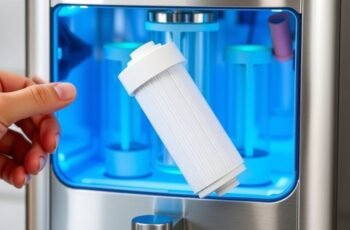
Failing to avoid common mistakes during water filter replacement can compromise water quality and damage the filtration system. Incorrect filter installation may lead to bypassed contaminants, reducing effectiveness. Ensuring proper alignment and sealing is critical for ideal water quality. A misstep, like installing the filter backwards, can cause system leaks or decreased flow rate. Additionally, neglecting to sanitize the housing or using incompatible filters may introduce bacteria or debris.
| Mistake | Consequence |
|---|---|
| Incorrect filter orientation | Reduced filtration efficiency |
| Skipping sanitization | Bacterial growth and water contamination |
| Using incompatible filters | Damage to system and compromised water quality |
How to Choose the Right Replacement Filter for Your System
Selecting the appropriate replacement filter requires careful consideration of system compatibility, ensuring the filter fits and functions correctly. We must evaluate the filter material and type to address specific contaminants and maintain ideal water quality. By analyzing these technical specifications, we can determine the most effective filter for our system’s requirements.
Compatibility With System
How can we guarantee the replacement filter we choose is compatible with our system? Confirming system compatibility is critical for ideal water quality and filter performance. First, verify the filter’s specifications match your system’s model number and size—incorrect fit can compromise filtration efficiency. Second, check the flow rate and pressure ratings; mismatched parameters may strain your system or reduce effectiveness. Third, confirm the filter’s connection type and mounting interface align with your existing setup to prevent leaks or installation issues. These steps are essential to maintain water quality standards and system integrity. By prioritizing compatibility, we safeguard the longevity of our filtration system and ensure consistent, safe drinking water.
Filter Material and Type
What factors should we consider when choosing the appropriate filter material and type for our system? Primarily, we evaluate the specific contaminants we need to remove, which guides the selection of suitable filter materials like activated carbon, resin, or ceramic. The filter type—such as cartridge, pitcher, or under-sink—must align with our usage volume and flow rate requirements. Material compatibility with our system’s plumbing and the desired filtration capacity are essential, ensuring durability and performance. Additionally, we analyze pore size to target pollutants effectively while preventing clogging. By understanding these technical aspects, we can optimize the filter material and type, ensuring efficient contaminant removal, minimal maintenance, and longevity of the filtration system.
Frequently Asked Questions
Can Using a Filter Beyond Its Recommended Lifespan Harm My Health?
Using a filter beyond its recommended lifespan can pose health risks due to contaminant buildup, which may lead to the release of harmful substances into your water. Regular replacement guarantees peak filtration and minimizes health hazards.
Are There Eco-Friendly Options for Water Filter Replacements?
Yes, we find eco-friendly materials and recyclable filters valuable, as they reduce environmental impact. We recommend choosing filters made from biodegradable or sustainable materials, and supporting brands that prioritize recyclability, fostering a more sustainable water filtration approach.
How Do Water Quality Changes Affect Filter Replacement Timing?
We observe that water quality changes, such as increased contaminant buildup, directly reduce filter efficiency, signaling the need for earlier replacements. Monitoring water quality helps us maximize filter lifespan and maintain ideal water purification performance.
What Are the Cost Differences Between Various Water Filter Types?
Like choosing a ship’s course, selecting filters involves weighing costs; cartridge filters tend to have shorter lifespans with lower replacement costs, whereas reverse osmosis units boast longer lifespan but higher expenses, demanding strategic investment for peak filtration efficiency.
Can I Clean and Reuse My Water Filter Instead of Replacing It?
We don’t recommend filter cleaning for reuse, as it often compromises filtration efficiency and raises reuse concerns. Typically, replacing filters guarantees ideal performance, as cleaning may not fully remove contaminants or restore original specifications effectively.
Conclusion
In summary, maintaining a strict replacement schedule is essential—studies show that water filters can lose up to 99% of their effectiveness after six months. By monitoring usage and following manufacturer guidelines, we reduce health risks and guarantee maximum filtration. Implementing a systematic approach minimizes bacterial growth and sediment buildup, ultimately safeguarding our water quality. Staying proactive with filter replacements isn’t just maintenance; it’s a critical step in protecting our health and maintaining consistent water purity.