Ad Blocker Detected
Our website is made possible by displaying online advertisements to our visitors. Please consider supporting us by disabling your ad blocker.
It’s a coincidence that many water ionizer issues often trace back to water quality, yet understanding these underlying causes is essential for maintaining peak performance. When mineral content and sediment accumulate, they can impair the device’s efficiency and longevity, leading to fluctuating pH levels and reduced water flow. Recognizing these signs early can prevent costly repairs and guarantee consistent alkaline water quality, but identifying the root problem requires a careful examination of system components and maintenance practices.
Key Takeaways
- Poor water quality and mineral buildup can cause scaling, clogging, and reduced ionization efficiency.
- Regular cleaning of electrodes and descaling prevent performance decline from mineral deposits.
- Inadequate filtration allows impurities that accelerate system wear and affect water quality.
- Electrical issues like damaged wiring or inconsistent power supply can impair device functionality.
- Routine maintenance, including filter replacement and performance testing, ensures optimal operation.
Common Causes of Water Ionizer Performance Problems
When a water ionizer begins to underperform, it often results from specific, identifiable issues within its internal components or water quality. Poor water quality, such as high mineral content or sediment, can cause scaling and clogging, reducing efficiency and compromising ionizer longevity. Mineral buildup on electrodes diminishes their conductive capacity, leading to inconsistent pH levels and decreased performance. Additionally, inadequate filtration allows impurities to accumulate, accelerating wear and tear on the system. Over time, these factors diminish the ionizer’s ability to produce stable, high-quality alkaline water. Regular maintenance, including cleaning and water quality management, is essential to mitigate these issues, ensuring ideal performance and extending the device’s lifespan. Addressing these root causes is key to maintaining reliable operation.
How to Test and Adjust Your Water pH Levels
To guarantee peak performance from your water ionizer, accurately testing and adjusting the pH levels is essential. Proper pH calibration ensures the device produces water within the desired alkalinity or acidity range, while mineral testing verifies the presence of essential ions influencing pH stability. Precise measurements can be achieved through digital pH meters or test strips, which provide immediate feedback for adjustments. Regular calibration and testing help maintain consistent output.
Key steps include:
- Conducting pH testing post-filtration to assess real water quality
- Comparing test results against manufacturer-recommended pH ranges
- Adjusting electrode settings based on calibration data
- Monitoring mineral content to prevent pH drift
- Repeating tests periodically for ongoing accuracy
This process assures your water ionizer functions efficiently and reliably.
Signs of Mineral Buildup and How to Clean Your Device
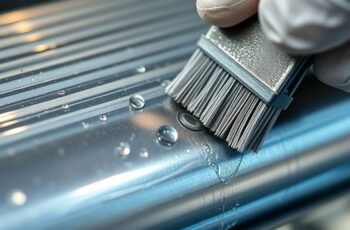
Mineral buildup is a common issue that can impair the efficiency and lifespan of your water ionizer. As minerals accumulate, they diminish water quality by reducing filtration effectiveness and altering pH levels. Signs include decreased water flow, cloudy or sediment-laden output, and irregular pH readings. These indicators suggest mineral deposits are clogging internal channels or coating electrodes. To address this, regular cleaning with a descaling solution is vital, focusing on removing mineral deposits from plates and filters. This process restores water quality and extends filter lifespan. Neglecting buildup accelerates component wear, compromises ionization performance, and shortens device longevity. Routine maintenance, including timely descaling, guarantees peak function and preserves the device’s capacity to produce high-quality alkaline and acidic waters.
Troubleshooting Electrical and Connection Issues
Electrical and connection issues are common sources of malfunction in water ionizers, often caused by loose or damaged wiring, faulty power sources, or improper connections. These problems can impact water quality and increase unnecessary power consumption, reducing overall device efficiency. To troubleshoot, we focus on verifying electrical integrity and connection stability. Key steps include:
- Inspecting wiring for visible damage or corrosion
- Ensuring all connectors are securely attached
- Testing the power outlet with a multimeter
- Checking for consistent voltage supply
- Confirming that internal circuitry isn’t compromised
Addressing these issues helps maintain ideal water quality and minimizes power use. Proper electrical connections also prevent irregular ionization, ensuring consistent performance and prolonging device lifespan.
Maintenance Tips to Prevent Future Performance Issues
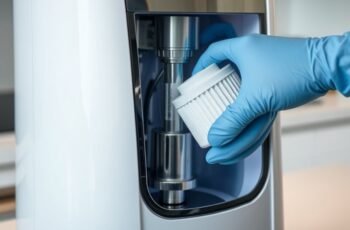
Regular maintenance of your water ionizer is essential for sustaining peak performance and preventing future issues. Consistently replacing the water filter as recommended in the user manual guarantees contaminants don’t impair ionization efficiency. Proper cleaning of internal components prevents mineral buildup that can alter pH levels and reduce lifespan. Monitoring filter lifespan and adhering to manufacturer guidelines minimizes performance degradation.
| Maintenance Task | Frequency |
|---|---|
| Replace water filter | Every 6-12 months |
| Clean electrodes | Quarterly |
| Review user manual | Annually |
Adhering to these tips guarantees consistent ionization quality and prolongs device longevity. Keeping detailed maintenance records helps track service intervals and prevents overlooked neglect that could lead to performance decline.
Frequently Asked Questions
How Long Do Water Ionizers Typically Last Before Needing Replacement?
Water ionizers typically last around 10 to 15 years, depending on electrode durability and filter lifespan. Regular maintenance and timely filter replacements are essential to prolonging the device’s efficiency and ensuring peak performance over its lifespan.
Are There Specific Water Types That Can Damage a Water Ionizer?
Certain water types, especially those with high mineralization or imbalanced pH, can silently damage your ionizer. These subtle threats disrupt pH balance and clog components, risking long-term performance. Stay vigilant to protect your device’s longevity.
Can Environmental Factors Affect the Performance of My Water Ionizer?
Environmental interference can impact water quality, affecting your water ionizer’s performance. External factors like temperature fluctuations, airborne pollutants, or electromagnetic interference may alter ionization efficiency, so maintaining controlled conditions guarantees ideal functionality and consistent water quality.
What Is the Best Way to Store My Water Ionizer When Not in Use?
Think of your ionizer as a poised athlete. For ideal performance, follow storage tips, guarantee thorough cleaning methods before storage, keep it dry, and avoid extreme temperatures, preserving its functionality like a champion ready for next performance.
Are There Any Safety Concerns With DIY Repairs on Water Ionizers?
DIY safety is essential when repairing water ionizers; we advise against it due to repair hazards like electrical shocks, leaks, or component damage. Professionals possess the training to mitigate risks and guarantee safe, effective repairs.
Conclusion
Regular maintenance of our water ionizer is like tuning a finely crafted instrument—necessary for peak performance. By understanding common issues, monitoring pH levels, and addressing mineral buildup promptly, we can guarantee consistent, high-quality alkaline water. Preventative care acts as a shield, much like armor, protecting the device from wear and tear. Staying vigilant with electrical checks and filter replacements will help us preserve efficiency, extending our ionizer’s lifespan and ensuring our water remains pure and properly balanced.